

 EN
EN

 English
 русский
 Français
 Español
 عربى
عربى
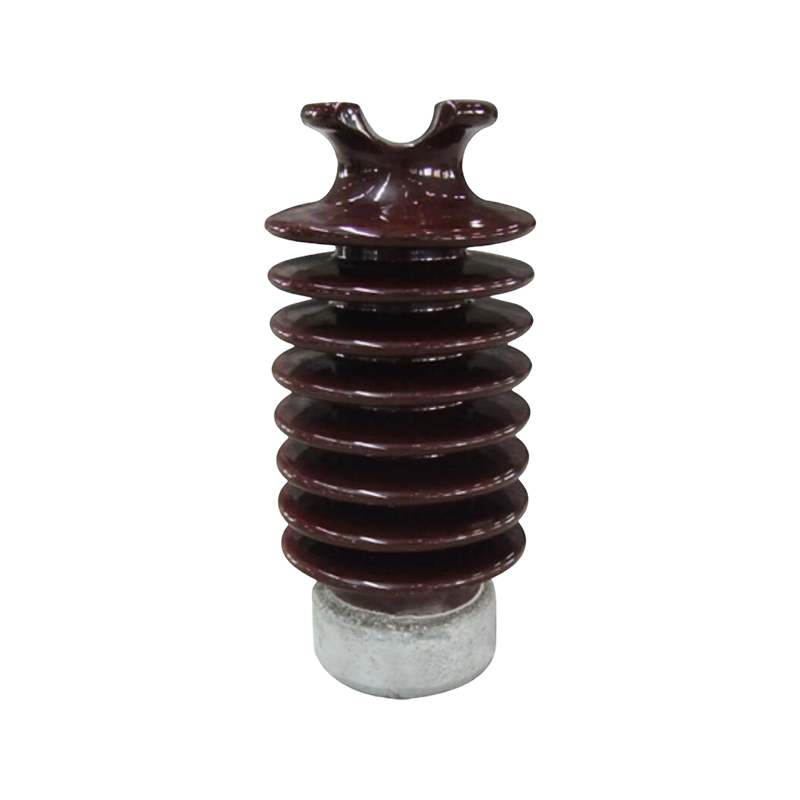
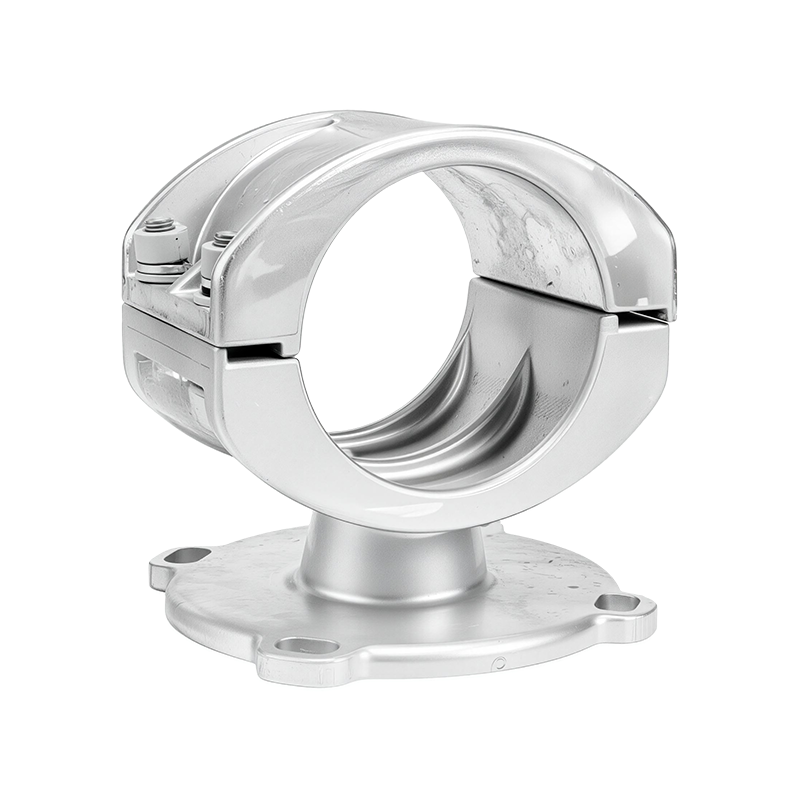
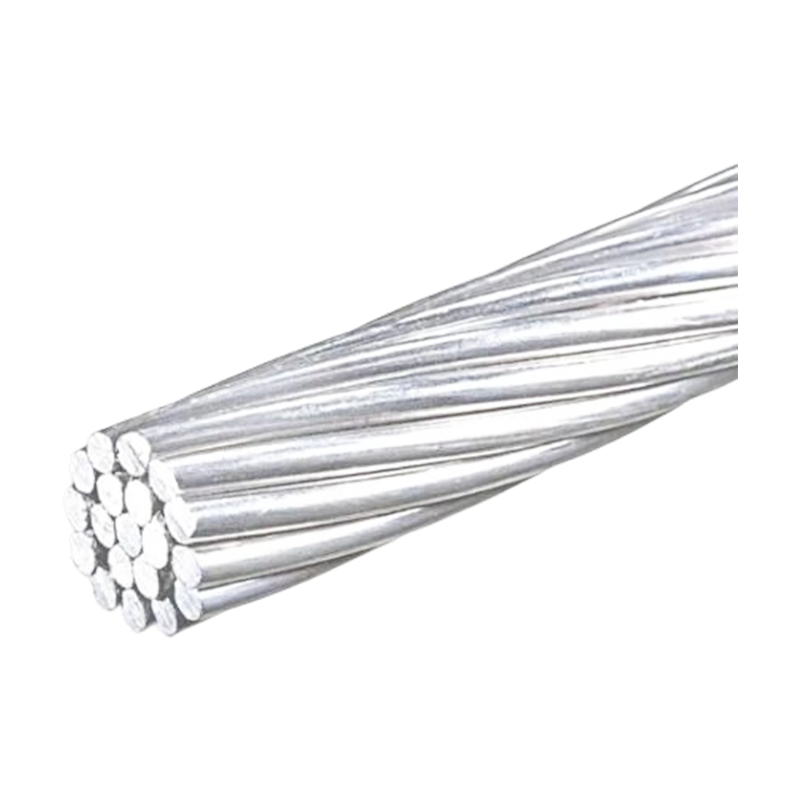
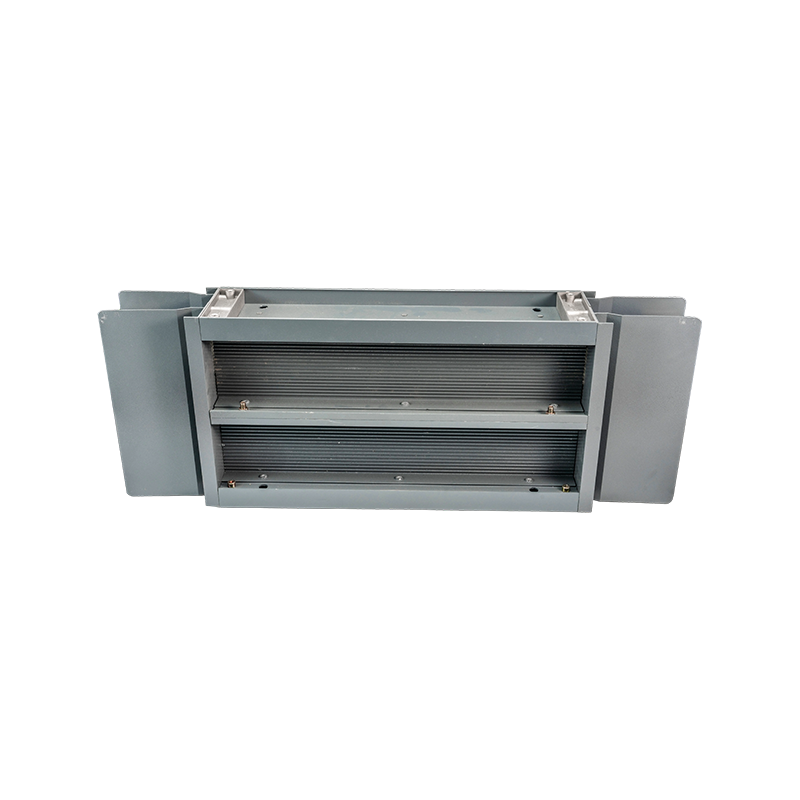
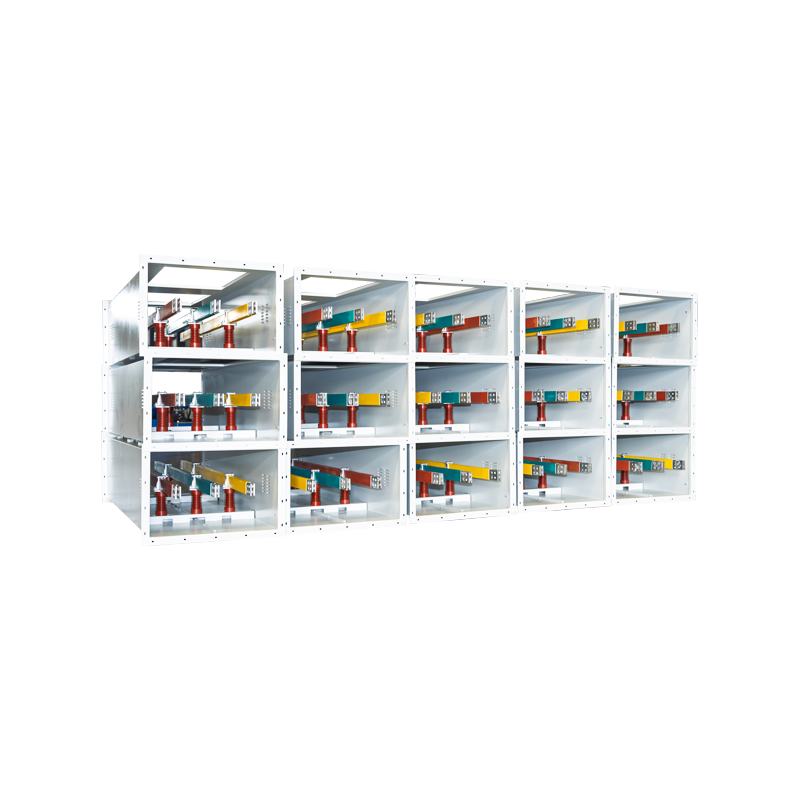



A crew arrives at a collector substation with a dozen aluminum tubes, a crate of clamps and one day before the bay is scheduled for energization. Lifting the tubes takes about an hour. The rest of the day disappears into support alignment, joint preparation, ...
View More +
Contact Us
Ultra-high Voltage Magnesium-Aluminum Alloy Tubular Bus Bar
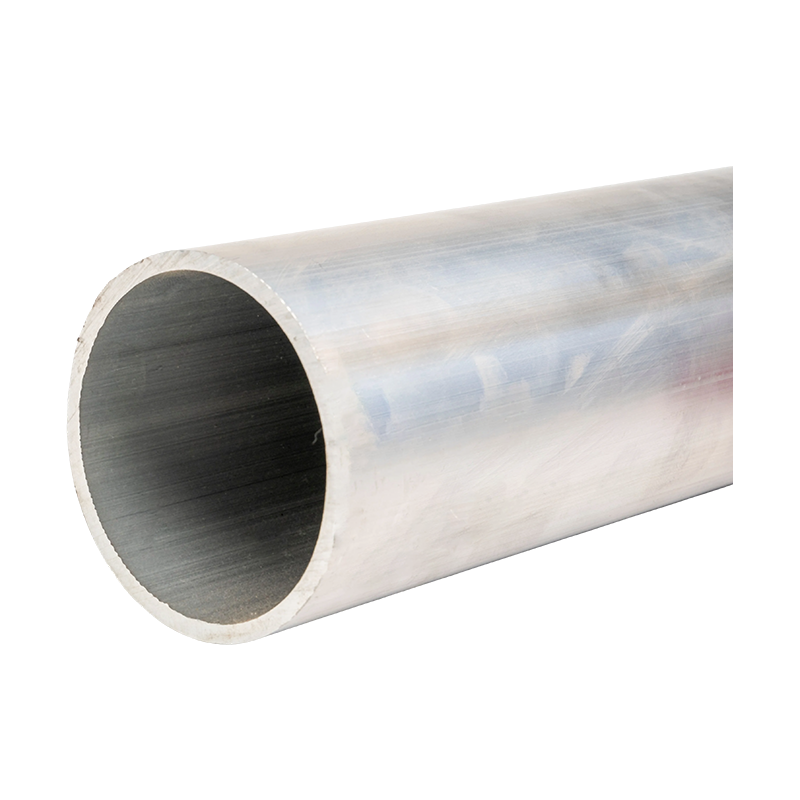
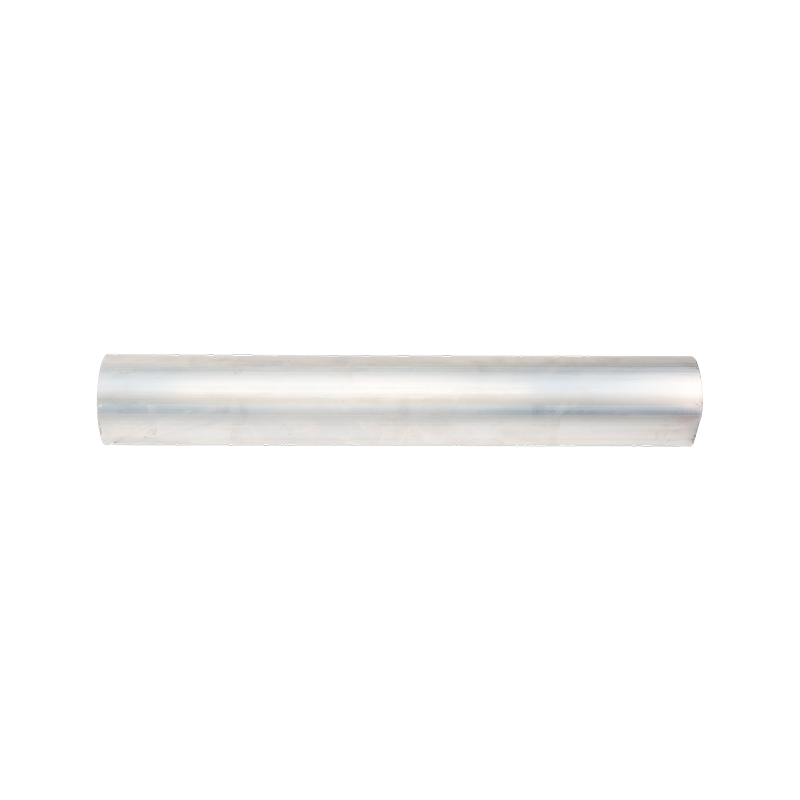
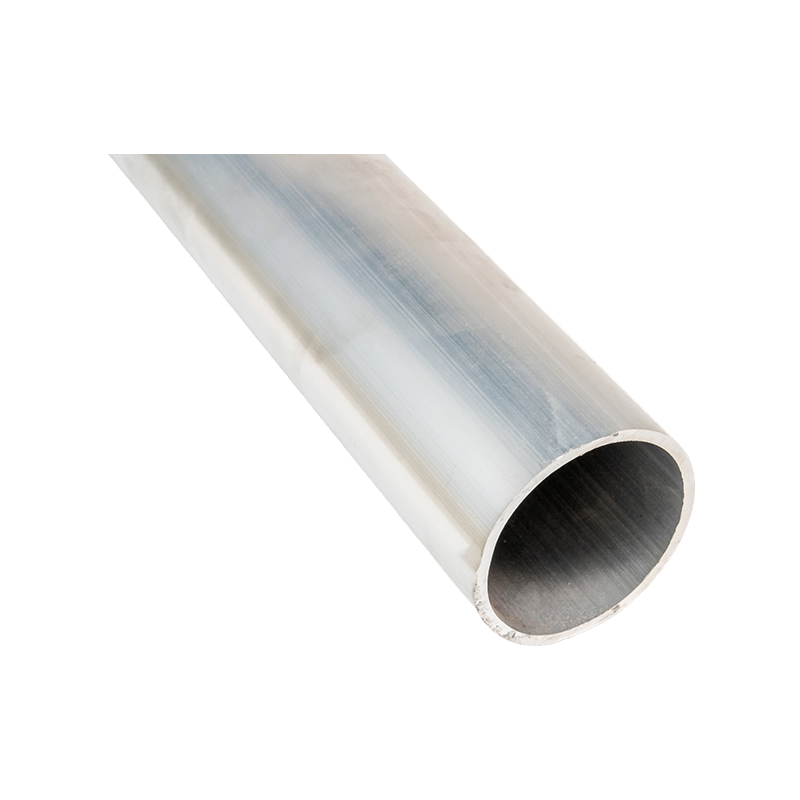
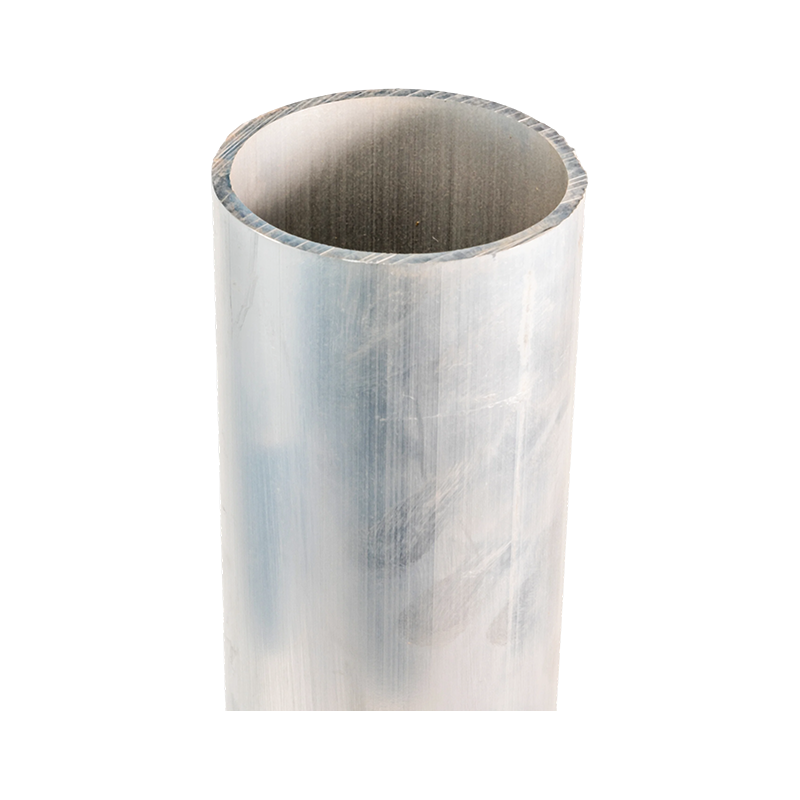
The Ultra-high voltage magnesium-aluminum alloy tubular bus bar is a key conductive component specifically designed for ultrahigh voltage power transmission and transformation systems. Utilizing a magnesium-aluminum alloy as its primary material, manufactured through advanced alloy formulations and precision processes, it forms a tubular conductor system with exceptional electrical performance, mechanical strength, and weather resistance. The product line includes various material specifications such as 6063G aluminum-magnesium alloy, LF21Y aluminum-manganese alloy, 6R05 rare-earth aluminum alloy, and 2A14 heat-resistant aluminum alloy, comprehensively covering ultrahigh voltage applications including 220 kV, 500 kV, 750 kV, ±800 kV, and 1000 kV scenarios.
- Product Details
- Features
- Contact Us
Technical Advantages
Advanced Material Technology
Utilizes independently developed rare-earth and heat-resistant aluminum alloy formulations, with material performance meeting internationally advanced standards.
The alloy composition is optimized to balance electrical conductivity, mechanical strength, and heat resistance.
Precision Manufacturing Processes
Horizontal hot top casting technology ensures material purity and microstructural uniformity.
Transverse piercing hotrolling technology enables seamless tube production, eliminating weld seam weaknesses.
Thermomechanical treatment and multipass cold-drawing processes precisely control the material's microstructure.
Excellent Electrical Performance
High Conductivity: Strong current-carrying capacity and high transmission efficiency.
Low Loss: Excellent convective heat dissipation design ensures controlled temperature rise and minimal energy loss.
High Current-Carrying Capacity: Supports ultrahigh current transmission requirements.
HighTemperature Resistance: Operating temperatures up to 150 °C–200 °C with stable performance under high-temperature conditions.
Reliable Safety Performance
Full Shielding Design: Uniform electric field distribution with no corona discharge.
Corrosion Resistance: Advanced surface treatment technology provides strong corrosion resistance.
IceProof Performance: Special surface treatment prevents ice formation.
Seismic Resistance: Structural design adapts to high-intensity seismic environments.
Features
Material Characteristics: The ultra-high voltage magnesium-aluminum alloy tubular bus bar employs an optimized ratio of magnesium to aluminum, achieving significant weight reduction while ensuring excellent electrical conductivity. Its high specific strength and superior corrosion resistance make it particularly suitable for ultra-high voltage applications, effectively improving current distribution uniformity and reducing overall system load.
Mechanical Performance: This product demonstrates outstanding tensile strength, bending resistance, and vibration resistance, supporting larger-span installations beyond conventional designs. It perfectly adapts to extreme environmental conditions such as high wind pressure and strong vibrations, providing reliable structural stability for demanding applications such as wind power and rail transportation.
Insulation and Process Compatibility: The magnesium-aluminum alloy tubular bus bar exhibits excellent compatibility with various insulation processes, including epoxy vacuum casting and PTFE wrapping. Special surface oxidation treatment effectively addresses insulation adhesion issues, ensuring tight bonding between the insulation layer and the conductor to meet insulation reliability requirements in diverse environments.
Application Scenario Expansion: Beyond traditional wind and photovoltaic applications, this product is particularly suitable for harsh conditions such as offshore wind power, salt fog environments, and high-altitude power stations. It also meets the stringent demands for lightweight design and corrosion resistance in specialized applications, such as rail transportation and aerospace, demonstrating broad industry adaptability.
About Us
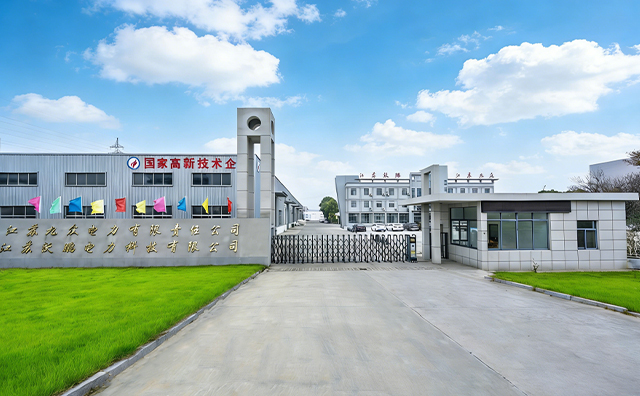
Jiangsu Wopeng Power Technology Co., Ltd.
Founded in June 2018, Jiangsu Wopeng Power Technology Co., Ltd. is a Custom Ultra-high Voltage Busbar System Manufacturer and OEM Magnesium-Aluminum Alloy Busbar Factory, it has rapidly grown into a specialized high-tech enterprise in the field of high and low voltage busbar systems.
We gather a professional team of industry experts, senior engineering and technical personnel, and experienced production specialists who have been engaged in power equipment technology for many years.
Our main products include copper & aluminum tube busbars, wind power tube busbars, intensive (compact) busbars and sliding contact line systems. We focus on the R&D and manufacturing of 0.4 kV–35 kV fully insulated enclosed tube busbars and low-voltage cast resin busway systems, providing reliable power transmission paths for power plants, substations, wind farms, rail transit and industrial facilities.
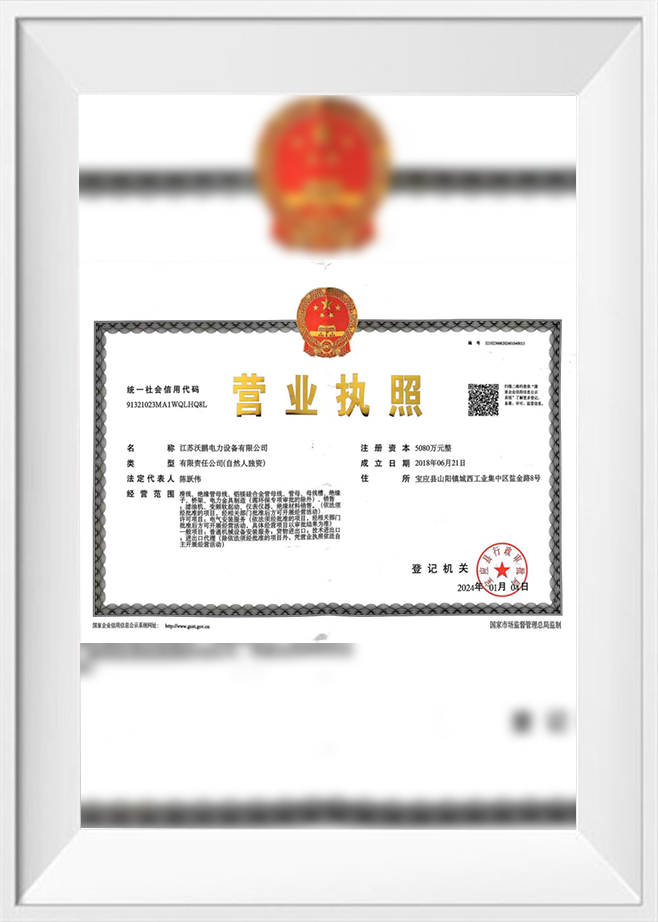
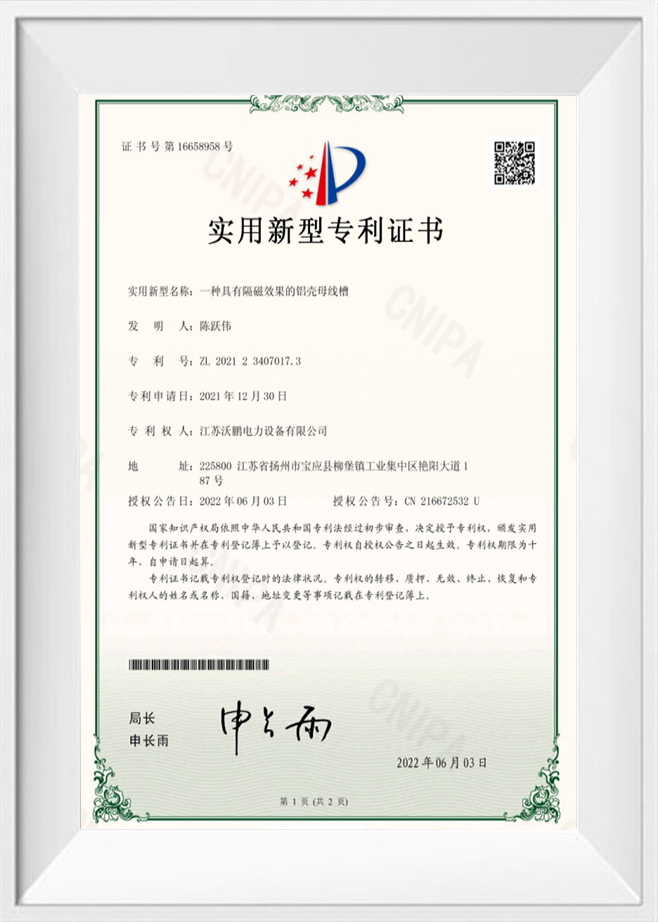
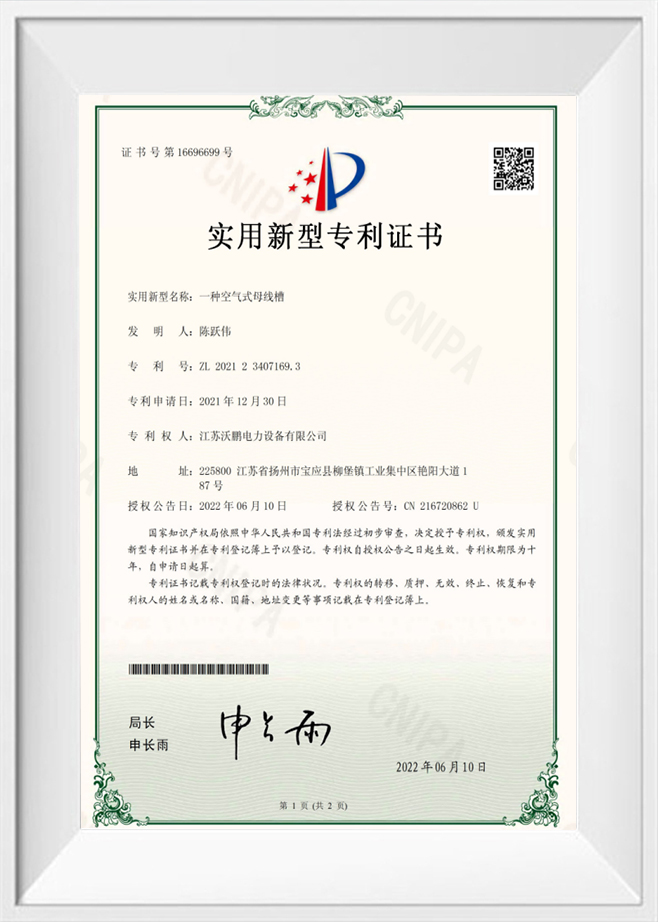
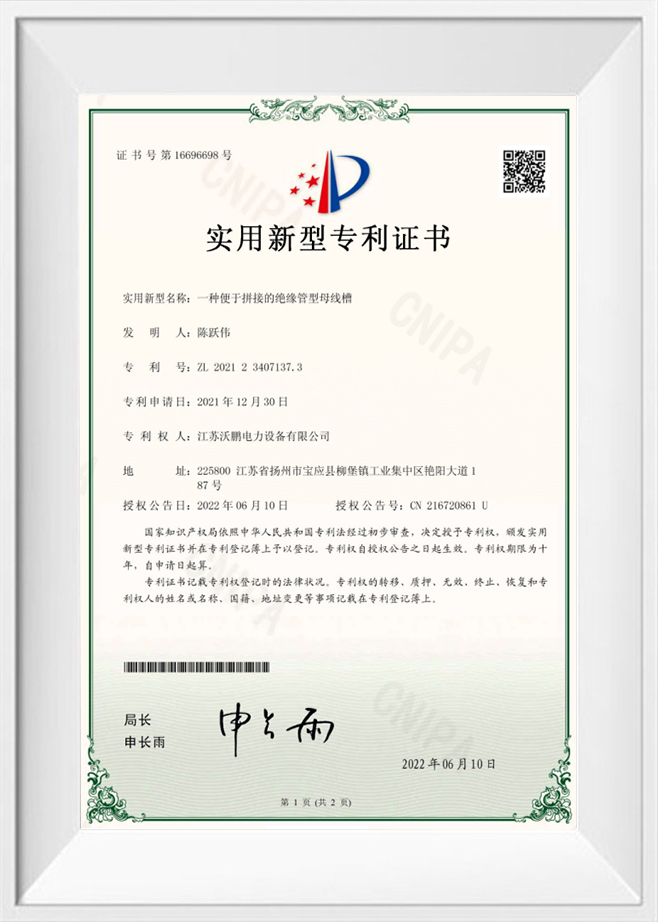
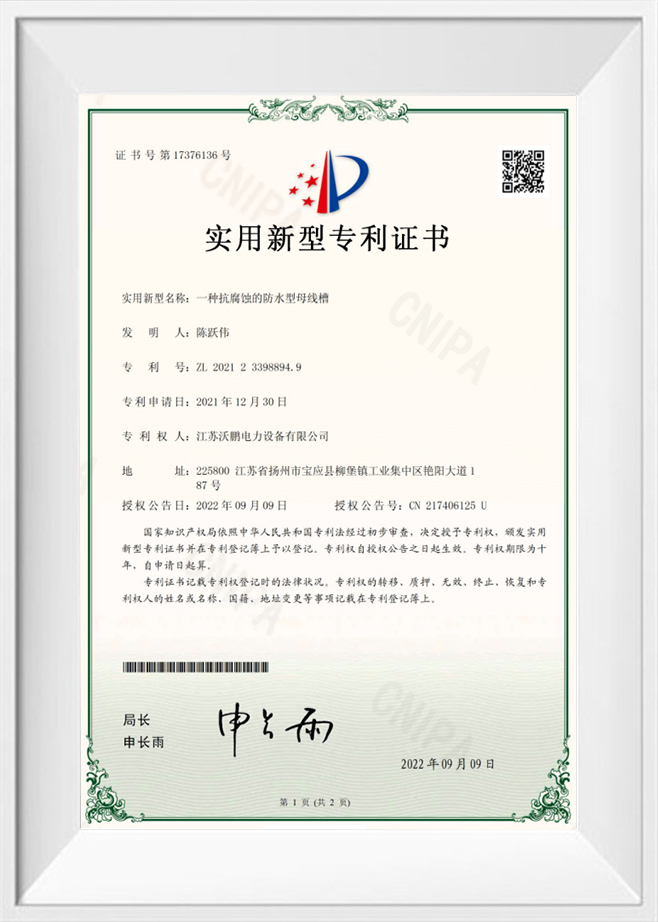
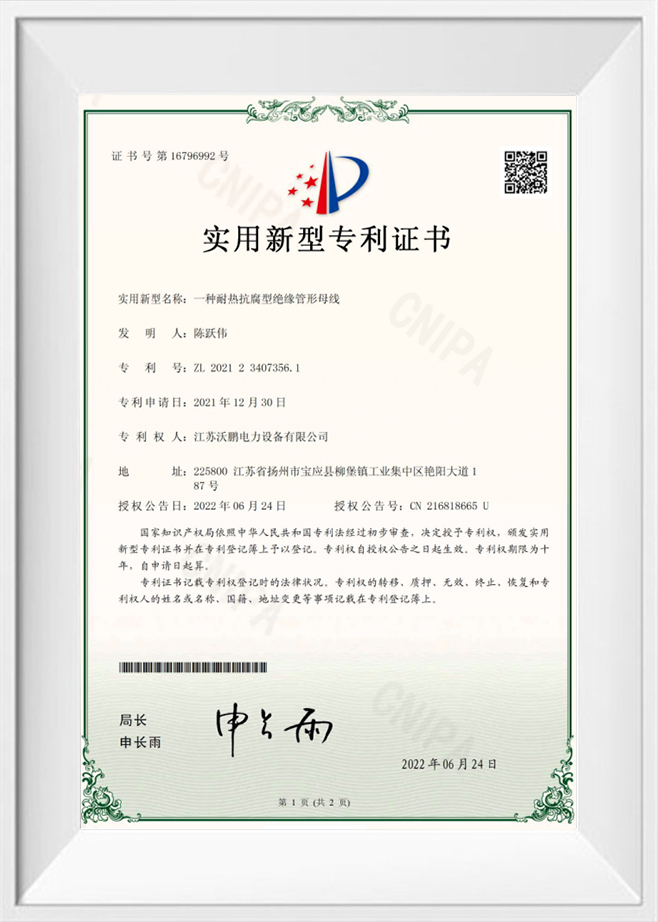
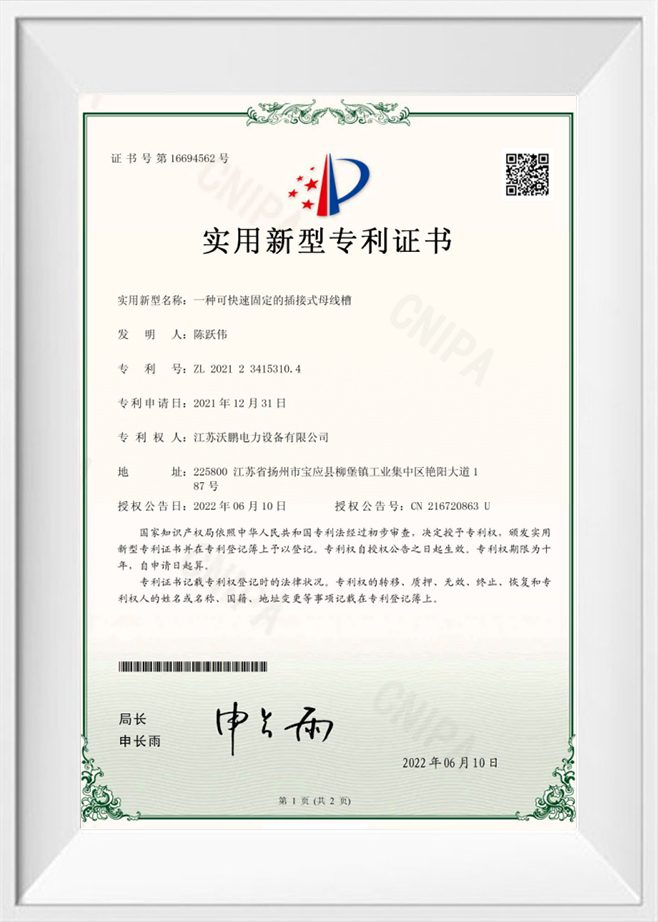
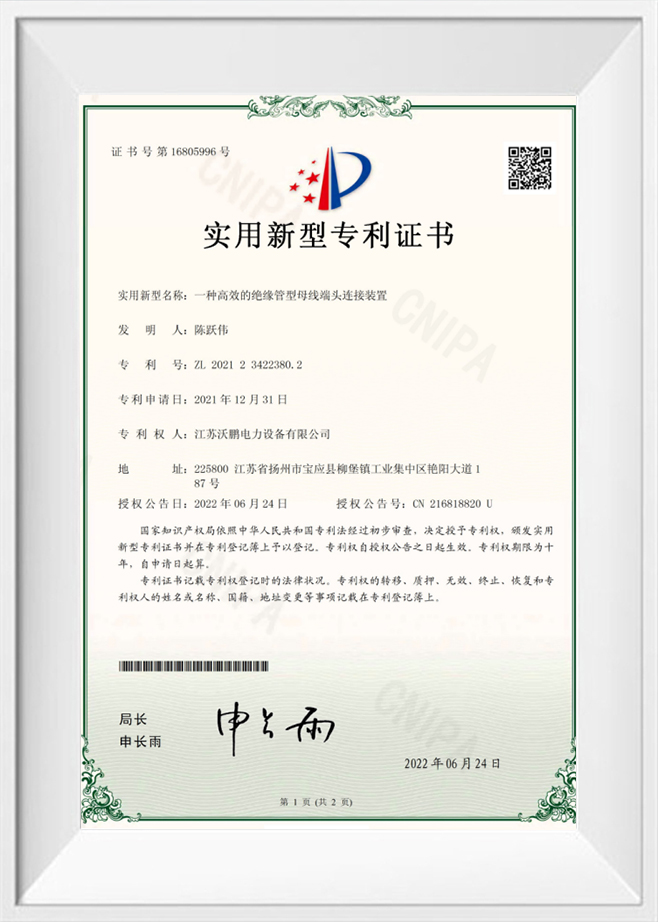
Certificate Of Honour
News
-
-
A busbar that passes its routine factory test can still fail in service when the insulation compound was matched to the wrong duty. Temperature is the clearest example: a casting rated for 130 °C continuous will harden and crack in a steel mill, while the sam...
View More + -
A 110 kV outdoor yard is 60 metres long, the incoming line lands on the west side, and the client wants two transformer bays plus space for a future third. The single-line diagram is approved. The question that stalls the project for a week is far less glamor...
View More +
Aluminum Alloy Tubular Bus Bar Industry knowledge
1. What Is Ultra-High Voltage Magnesium-Aluminum Alloy Tubular Bus Bar
The Ultra-high Voltage Magnesium-Aluminum Alloy Tubular Bus Bar is a high-performance conductive component, composed of magnesium-aluminum alloy, designed for ultra-high voltage (UHV) power transmission and distribution systems. It integrates the lightweight advantage of aluminum and the high mechanical strength of magnesium, serving as a core carrier for large-current, low-loss power transmission. A professional Ultra-high Voltage Magnesium-Aluminum Alloy Tubular Bus Bar manufacturer produces products that meet UHV standards (≥500kV), with stable performance and long service life.
(1) Core Performance Indicators
Products from a reliable Ultra-high Voltage Magnesium-Aluminum Alloy Tubular Bus Bar manufacturer have a rated voltage of 500kV-1000kV, rated current up to 12000A, and electrical conductivity of ≥60% IACS. They can withstand working temperatures of -40℃ to 150℃ and have a tensile strength of 180-250MPa, suitable for harsh power system environments.
2. Main Uses of Ultra-High Voltage Magnesium-Aluminum Alloy Tubular Bus Bar
As a key component in UHV power systems, the Ultra-high Voltage Magnesium-Aluminum Alloy Tubular Bus Bar is widely used in scenarios requiring high current transmission and stable insulation, mainly including:
- UHV substations (500kV and above), used for bus bar connections between transformers, circuit breakers and other equipment.
- Power generation plants (hydropower, thermal power, new energy), connecting generators to power grids for large-current output.
- UHV transmission line connection nodes, reducing power loss and ensuring stable power transmission over long distances.
- Large industrial power distribution systems (metallurgy, chemical industry), adapting to high-load and high-voltage working conditions.
The Ultra-high Voltage Magnesium-Aluminum Alloy Tubular Bus Bar effectively solves the problems of heavy weight and high loss of traditional bus bars, improving the efficiency of power transmission systems.
3. Performance Comparison with Traditional Bus Bars
| Bus Bar Type | Weight (kg/m) | Power Loss | Max Voltage |
|---|---|---|---|
| Ultra-high Voltage Magnesium-Aluminum Alloy Tubular Bus Bar | 8-12 | Low (≤2% per 100m) | 1000kV |
| Traditional Copper Bus Bar | 25-30 | Medium (≤3.5% per 100m) | 500kV |
| Ordinary Aluminum Bus Bar | 7-10 | High (≤4% per 100m) | 220kV |
A professional Ultra-high Voltage Magnesium-Aluminum Alloy Tubular Bus Bar manufacturer optimizes the alloy ratio, making the product lighter than copper bus bars and more energy-efficient than ordinary aluminum bus bars, which is the preferred choice for UHV power systems.
4. Frequently Asked Questions
Q1: What is the service life of Ultra-high Voltage Magnesium-Aluminum Alloy Tubular Bus Bar?
A: With anti-corrosion treatment, it can serve 30-40 years in UHV power systems under normal working conditions.
Q2: How to choose a reliable Ultra-high Voltage Magnesium-Aluminum Alloy Tubular Bus Bar manufacturer?
A: Prioritize manufacturers with UHV product type test reports, stable alloy material quality, and rich project application experience.
Q3: Can it be used in outdoor harsh environments?
A: Yes, it has excellent weather resistance and can withstand high temperature, low temperature and salt spray, suitable for outdoor UHV substations.
Q4: What is the maximum span of this bus bar?
A: The maximum support span can reach 8 meters, reducing the number of supports and simplifying installation.

Mobile
CATEGORY
Products
Contact Us
-
 +86-180 3625 3000
-
 admin@wpbusbar.com
-
 No. 8, Yanjin Road, Chengxi Industrial Park, Shanyang Town, Baoying County, Yangzhou City, Jiangsu Province, China
Copyright © Jiangsu Wopeng Power Technology Co., Ltd.
All Rights Reserved.
 Custom Insulated Bus Bar Manufacturer
Tubular Busbar System Factory
Custom Insulated Bus Bar Manufacturer
Tubular Busbar System Factory