

 EN

 English
 русский
 Français
 Español
 عربى

How to Choose Busbar Insulation Material: Epoxy Resin, EPDM or PTFE for 35 kV?
Content
- 1 Four Busbar Insulation Materials You Will Actually Compare
- 2 Voltage Class Sets the Minimum Insulation Thickness
- 3 Environment and Installation Decide More Than the Datasheet
- 4 High Temperature and Chemical Duty: Where PTFE Earns Its Price
- 5 Reading the Test Data: Five Numbers That Matter
- 6 Fault Current and Support Spacing
- 7 Cost, Lead Time and Procurement Risks
- 8 A Practical Selection Sequence
- 9 FAQ
A busbar that passes its routine factory test can still fail in service when the insulation compound was matched to the wrong duty. Temperature is the clearest example: a casting rated for 130 °C continuous will harden and crack in a steel mill, while the same busbar sits comfortably in a substation for decades. Choosing busbar insulation material is a matching exercise, not a shopping exercise.
The short answer first. For 35 kV and below, three materials cover almost every fully insulated tubular busbar project: epoxy resin casting for rigid, high-mechanical-duty runs; EPDM silicone rubber for flexible, outdoor and vibration-heavy routes; and PTFE for high-temperature or chemically aggressive areas. Wall thickness, creepage distance and support spacing then follow from voltage class, environment and fault current.
Four Busbar Insulation Materials You Will Actually Compare
Most projects shortlist two or three of the options below. The table gives the practical differences; the notes after it explain where each one breaks down.
| Insulation material | Typical voltage use | Continuous temperature | Key strength | Best fit | Main risk |
|---|---|---|---|---|---|
| Vacuum-cast epoxy resin | up to 35 kV | -40 to +130 °C | Rigid, high mechanical strength | Substations, long rigid runs, high fault current | Voids or poor casting cause partial discharge; repairs mean replacement |
| EPDM silicone rubber | up to 40.5 kV | -50 to +150 °C | Flexible, UV and ozone resistant | Wind towers, coastal sites, vibrating structures | Lower stiffness; needs closer support spacing |
| PTFE | up to 35 kV and above | -60 to +260 °C | Chemically inert, low dielectric constant | Chemical plants, furnace areas, tight spaces | Highest cost; cold flow under clamps |
| Heat-shrink, PE or PVC | mainly up to 1 kV | -20 to +105 °C | Low cost, fast installation | Low-voltage busway and control panels | Weak outdoor tracking resistance |
Epoxy resin casting: the default for rigid runs
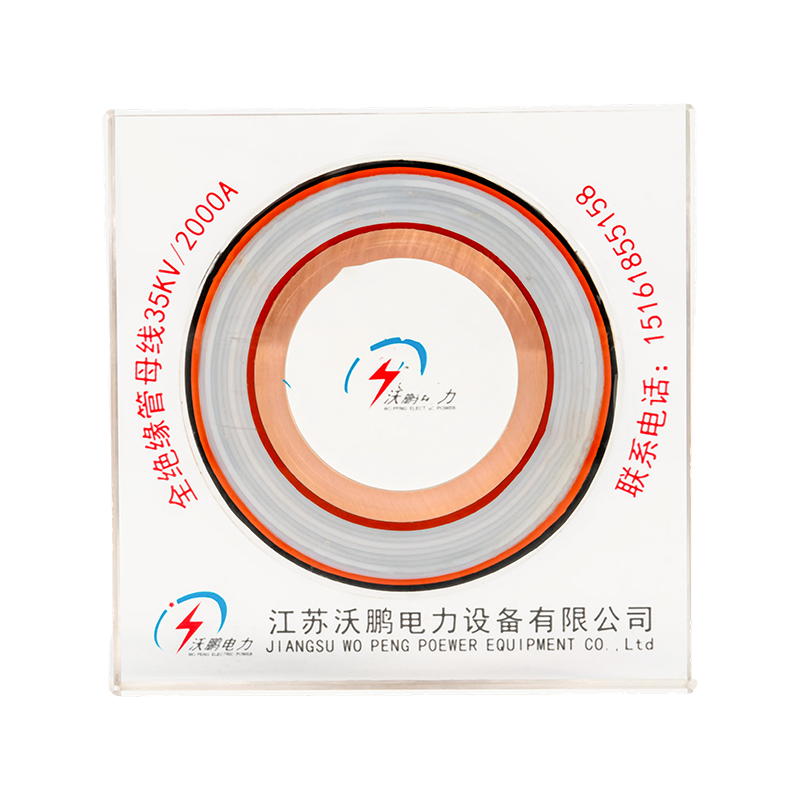
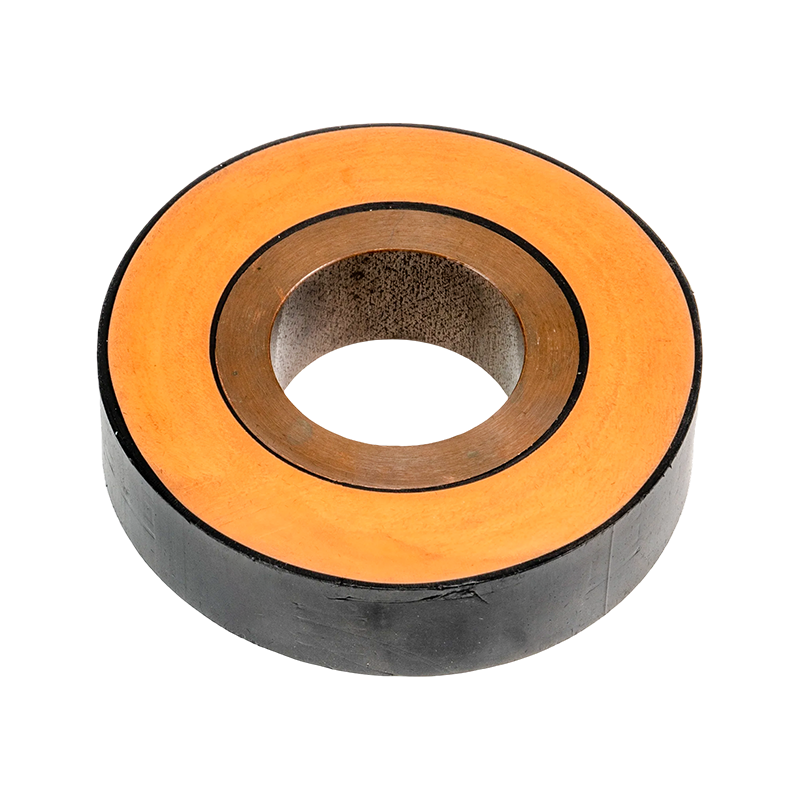
Vacuum-cast epoxy resin is the workhorse of tubular busbar insulation. The conductor is centred in a mould, resin is cast under vacuum to remove voids, and the result is a rigid, self-supporting shell with strong mechanical properties, which matters when short-circuit forces are measured in kilo-newtons. Its limits are equally clear: thermal cycling above roughly 130 °C, poor casting practice that leaves partial discharge, and repairs that usually mean replacing the whole section. Process control decides more than the compound datasheet.
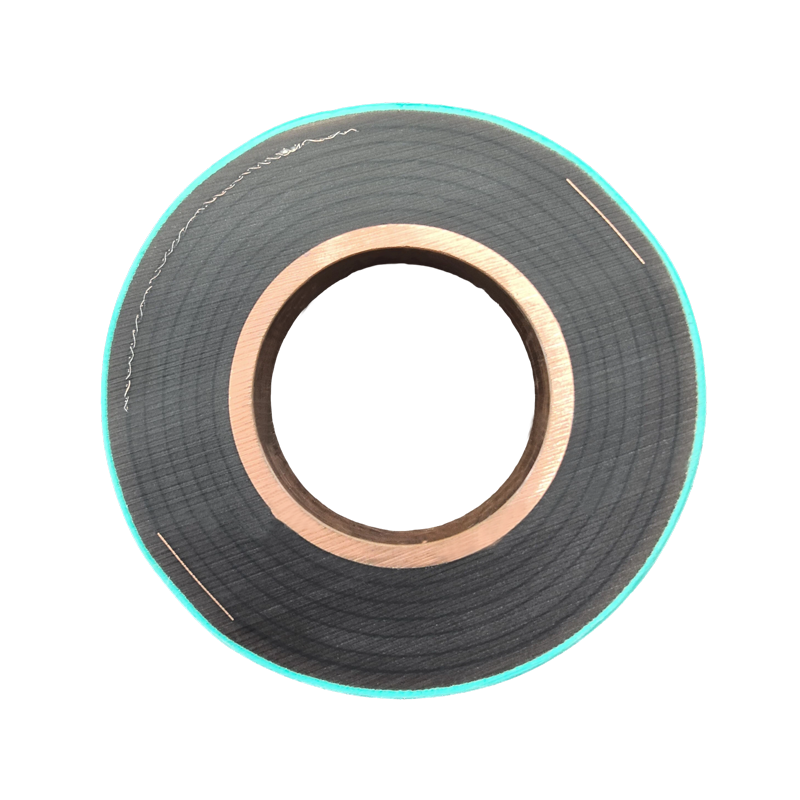 Vacuum-Cast Epoxy Resin Tubular Bus BarFully insulated vacuum-cast epoxy tubular busbar for power transmission, with rigid molded construction and shielding for installations needing mechanical strength.View Product →
Voltage Class Sets the Minimum Insulation Thickness
Voltage determines two numbers that buyers often confuse: dielectric strength and creepage distance. Dielectric strength is a material property measured in kV/mm; creepage is a geometry decision measured in millimetres between phases and to earth. Indoors and dry, creepage is rarely the limiting factor. On the coast, in dust or in high humidity, it usually is.
- Up to 1 kV: busway and busbar trunking. Extruded or heat-shrink insulation is normal, and damp switch rooms plus installation damage cause most failures.
- 3 kV to 35 kV: cast epoxy, EPDM rubber and PTFE are all in play. Pollution level and altitude push creepage requirements up.
- Above 35 kV: composite shells and generous air clearances take over, and conductor radius and surface finish matter as much as the insulation material.
As a planning figure, allow roughly 20 to 30 mm of creepage per kV indoors, and considerably more in polluted or coastal environments, then confirm against the applicable standard rather than a rule of thumb.
Environment and Installation Decide More Than the Datasheet
Two busbars with the same voltage rating can need different materials because of where they sit and how they are supported.
Outdoor, coastal and vibrating routes
EPDM silicone rubber is usually the practical answer here. It stays flexible from about -50 °C to +150 °C, resists UV and ozone, and tolerates the deflection that a wind tower or rail gantry imposes on a fixed run. Long lengths are easier to ship because the insulation bends around transport constraints. The trade-off is stiffness: silicone-insulated busbars need closer support spacing than cast epoxy, and clamps must not pinch the rubber.
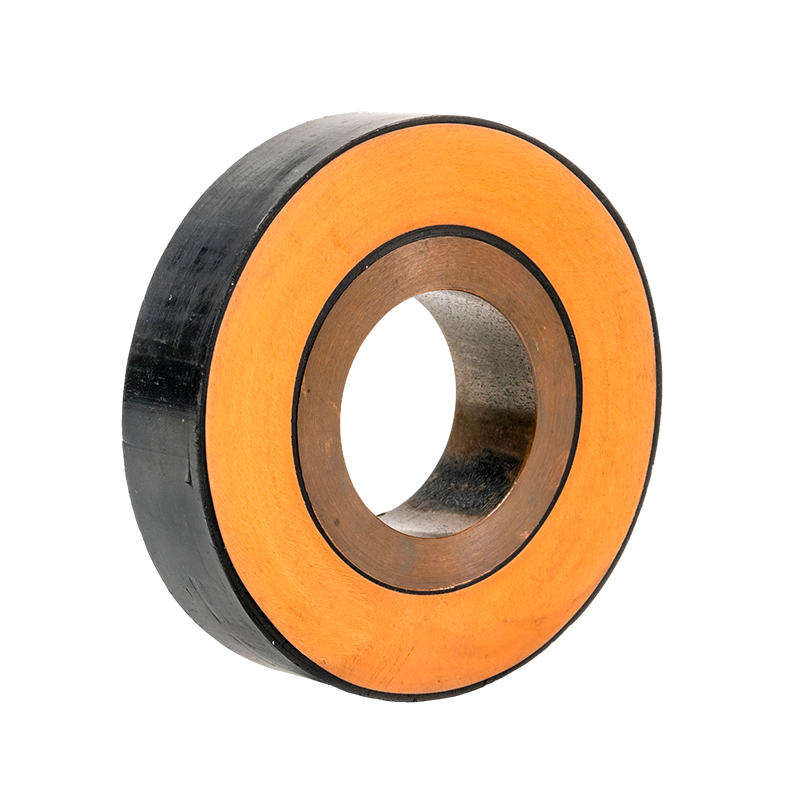 EPDM Silicone Rubber Tubular Bus BarFlexible high-voltage tubular busbar with co-extruded EPDM rubber insulation and shielding, suited to outdoor routes where movement and weather resistance matter.View Product →
Indoor switch rooms
Cast epoxy normally wins indoors on mechanical grounds, but condensation and vermin still matter. Check whether the enclosure is sealed and whether the creepage figure was calculated for a dry or a damp room, because a design that is fine in one is often marginal in the other.
High Temperature and Chemical Duty: Where PTFE Earns Its Price
PTFE becomes the only workable option above roughly 150 °C continuous, where epoxy and most rubbers age quickly, and in plants where acid mist or solvent vapour attacks other polymers. Its dielectric constant of about 2.1 also keeps capacitance low, which matters in some measurement and inverter circuits.
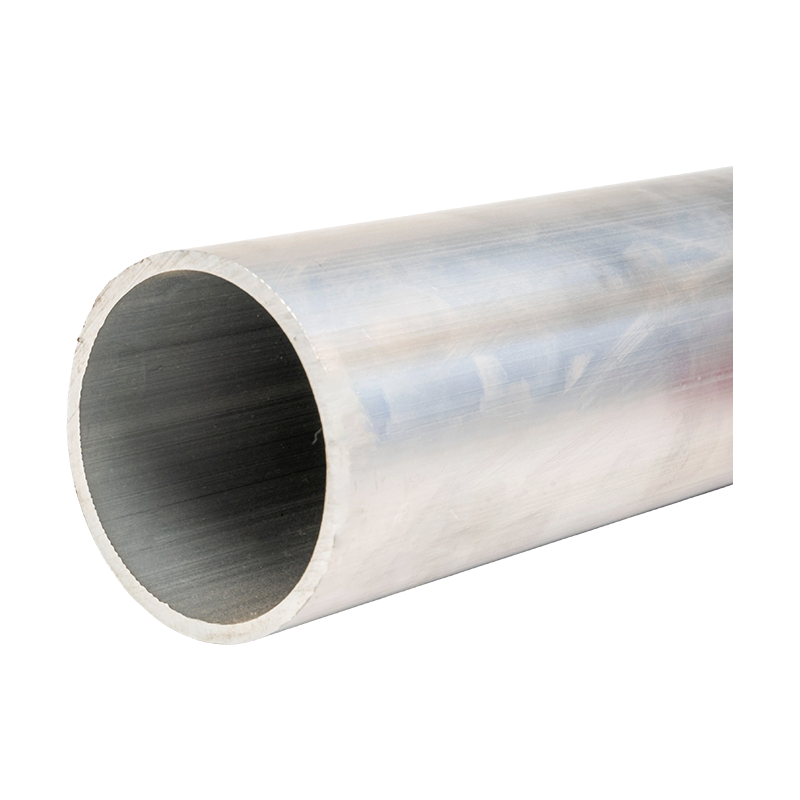
The cost is real: a PTFE-insulated busbar can cost several times an epoxy equivalent, and PTFE cold-flows under sustained clamping pressure, so the support design must spread the load instead of concentrating it. If the duty is only slightly above 150 °C, check whether better ventilation or a different route is cheaper than switching materials. If it genuinely is not, review the construction details of a PTFE tubular busbar before you specify.
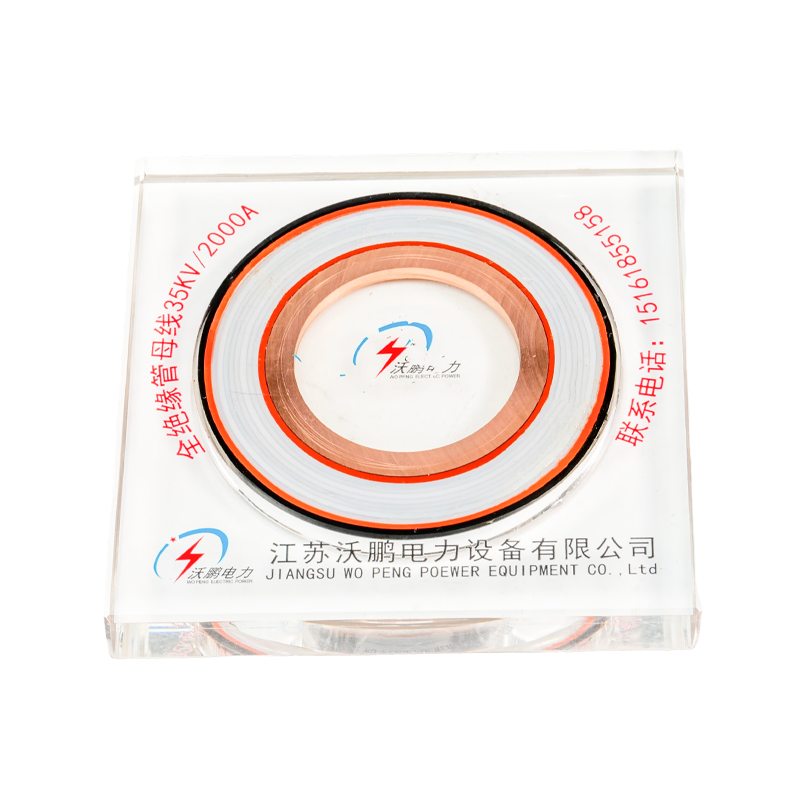 PTFE Film-Wound Tubular Bus Bar for Extreme EnvironmentsFully insulated PTFE tubular busbar with wound film insulation, capacitive screens, and high-temperature corrosion resistance for demanding high-voltage routing.View Product →
Reading the Test Data: Five Numbers That Matter
- Dielectric strength in kV/mm, useful for thickness calculations, but only meaningful when the sample is void-free.
- Comparative Tracking Index, the resistance to surface tracking under contamination. Values above 600 V are common for outdoor and polluted service.
- Relative Thermal Index, the long-term temperature the material tolerates. Ask for the RTI, not the short-term heat deflection figure.
- Flammability rating and glow-wire results, relevant in tunnels, stations and commercial buildings where fire load is regulated.
- Partial discharge in pC, the best single indicator of casting quality. Controlled vacuum casting keeps values low at 1.5 times rated voltage.
Also separate type tests from routine tests. A type-test report proves the design; routine tests prove the individual unit. Both should be available before delivery, and both should reference the same standard.
Fault Current and Support Spacing
Short-circuit forces scale with the square of the peak current, so a 50 kA fault produces roughly 100 times the force of a 5 kA fault. Insulation that is electrically adequate can still fail mechanically when support spacing is too wide, especially with flexible rubber insulation.
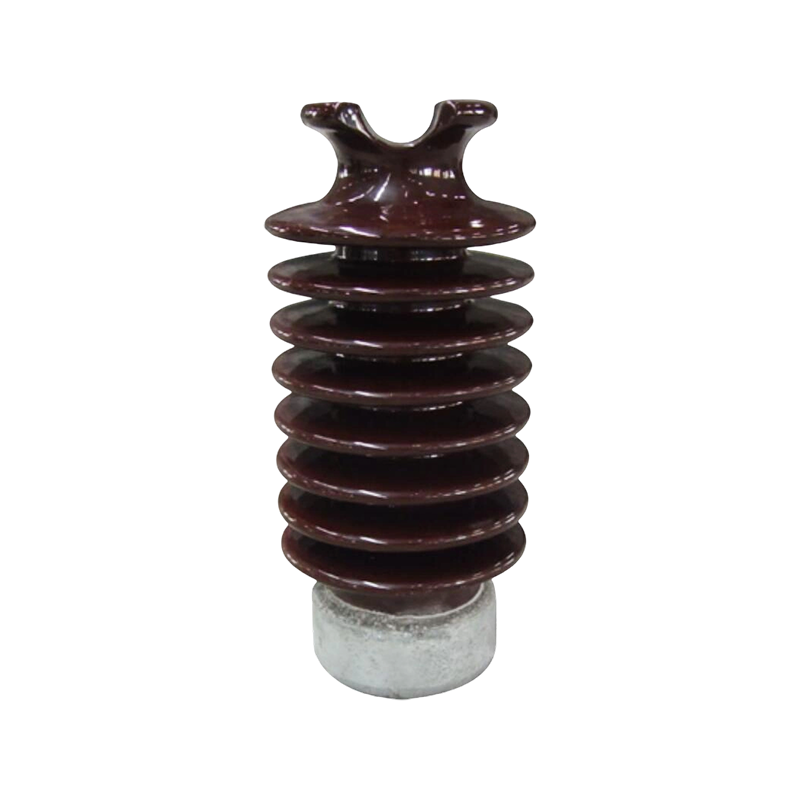
Ask for the permissible support spacing at the design fault level, and check the supports themselves: insert thread size, insert material and creepage over the support surface. A brass insert resists thread stripping better than mild steel, and multi-pole support blocks hold phase spacing more accurately than individual stand-off insulators on long runs.
Cost, Lead Time and Procurement Risks
Insulation typically accounts for a large share of the cost of a fully insulated busbar section, so the material choice moves the budget more than most buyers expect. Three risks are worth pricing in:
- Substituting compound grade, since two quotations can both say "epoxy resin" while one uses a formulation with a far lower RTI.
- Undersized wall thickness, which shows up as partial discharge rather than immediate failure.
- Long PTFE lead times, because specialty fluoropolymer stock can add weeks against a fixed commissioning date.
Ask for the compound grade, the type-test reference and the routine test report on the quotation, not after the order.
A Practical Selection Sequence
- Fix the system voltage, the highest continuous ambient temperature and the design fault current.
- Define the environment: indoor or outdoor, pollution level, salt or chemical exposure, altitude, condensation.
- Decide rigid or flexible, based on route length, vibration and available support points.
- Shortlist two materials, then compare creepage distance, RTI and CTI at your actual duty.
- Check the support system, insert material and permissible spacing against the fault level.
- Confirm type tests, routine tests and compound grade in writing before ordering.
FAQ
Can I use epoxy resin insulation outdoors?
Yes. Vacuum-cast epoxy is widely used outdoors up to 35 kV, provided the creepage distance suits the pollution level and the surface sheds water. UV is rarely the limiting factor; contamination and thermal cycling are.
Is silicone rubber insulation weaker than epoxy?
It is softer, not weaker electrically. The difference shows up mechanically, because silicone-insulated busbars deflect more under fault forces and need closer support spacing.
How much does insulation material add to the cost?
Expect a wide spread. Heat-shrink is cheapest, cast epoxy sits in the middle, and PTFE can be several times the epoxy figure for the same length. Above 150 °C continuous, the real comparison is between PTFE and a redesign of the route.
What is the single most useful document to request?
The type-test report for the same design and insulation grade, with partial discharge values at 1.5 times rated voltage. It says more about long-term reliability than any datasheet.
Choosing busbar insulation material comes down to four inputs: voltage, temperature, environment and fault current. Match those, verify them with type-test data, and specify the compound grade in writing. The material that looks cheapest on the quotation is rarely the one that survives twenty years of thermal cycling.



-
 +86-180 3625 3000
-
 admin@wpbusbar.com
-
 No. 8, Yanjin Road, Chengxi Industrial Park, Shanyang Town, Baoying County, Yangzhou City, Jiangsu Province, China
Copyright © Jiangsu Wopeng Power Technology Co., Ltd.
All Rights Reserved.
 Custom Insulated Bus Bar Manufacturer
Tubular Busbar System Factory