

 EN
EN

 English
 русский
 Français
 Español
 عربى
عربى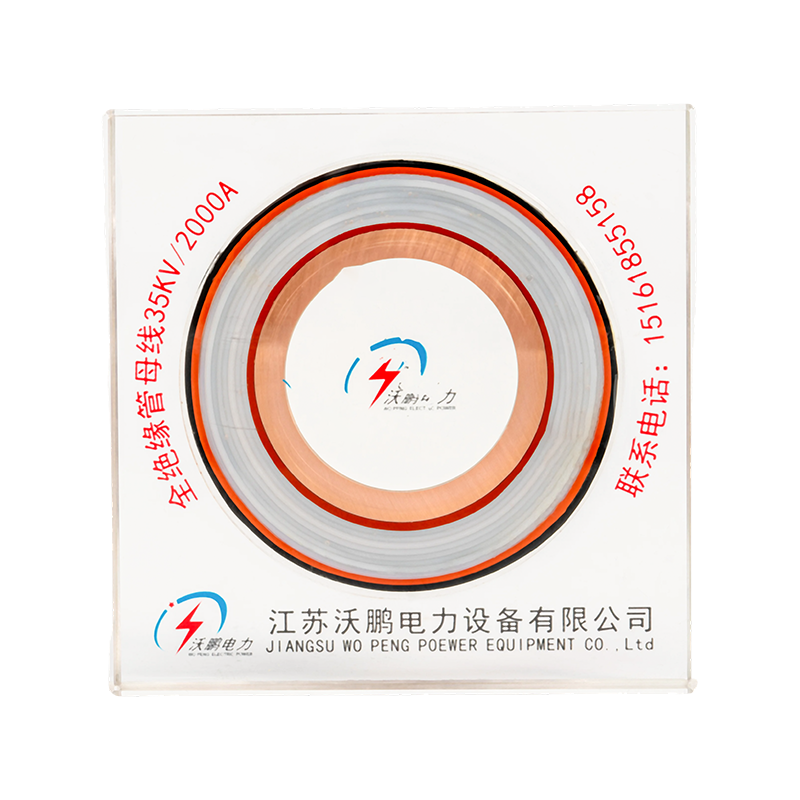


What Is a PTFE Tubular Busbar?
Content
- 1 Structural Analysis: Precision Design of the Five-Layer Protection System
- 2 Material Properties: PTFE Adaptability to Extreme Environments
- 3 Performance Advantages: Why Choose a Tubular Structure
- 4 Application Scenarios: Coverage from Land to Deep Sea
- 5 Technology Evolution and Future Directions
- 6 Selection and Operation & Maintenance Essentials
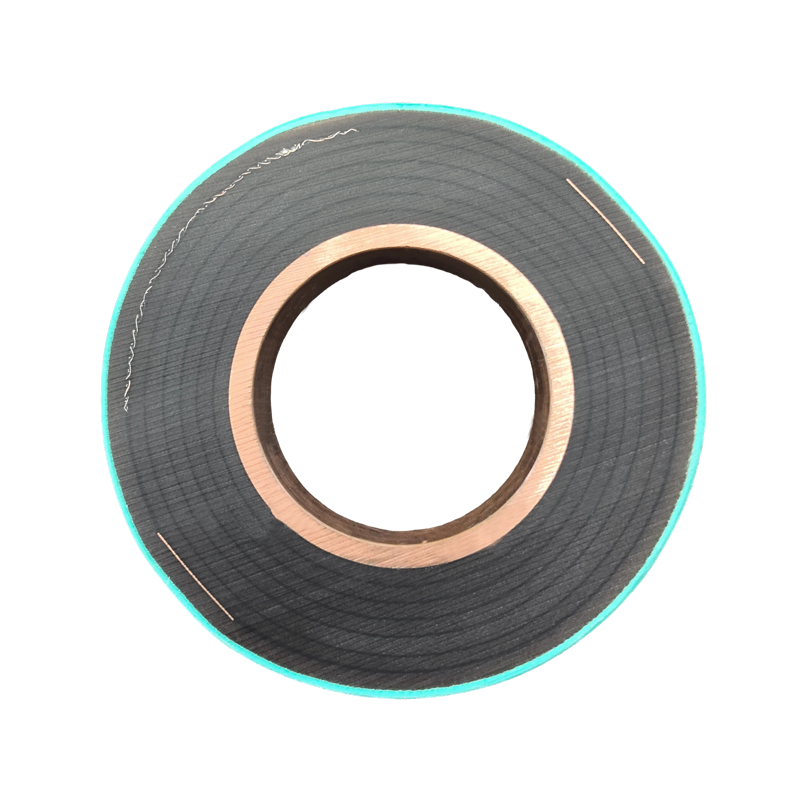
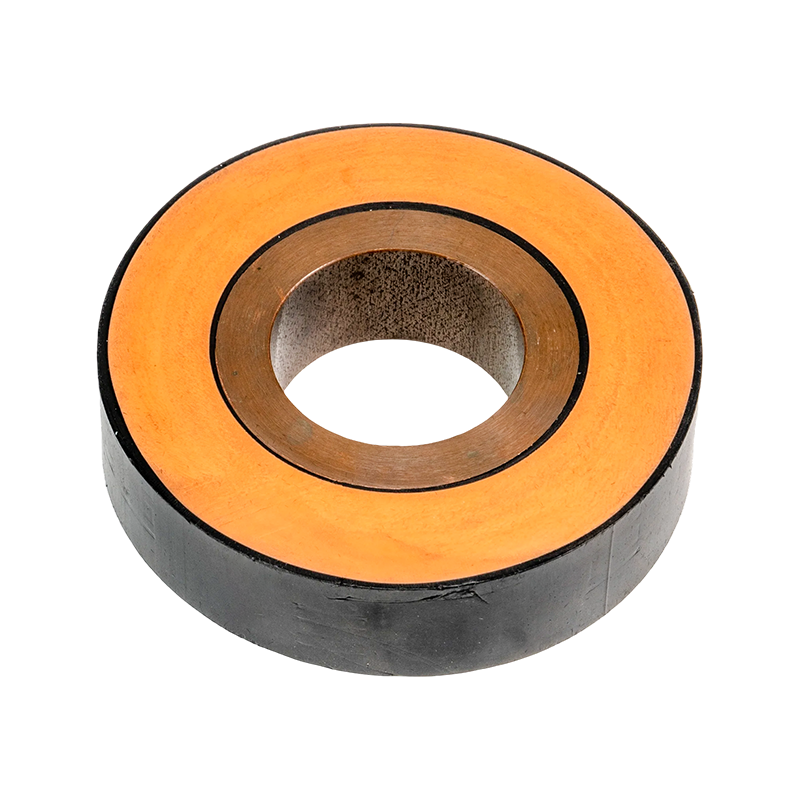
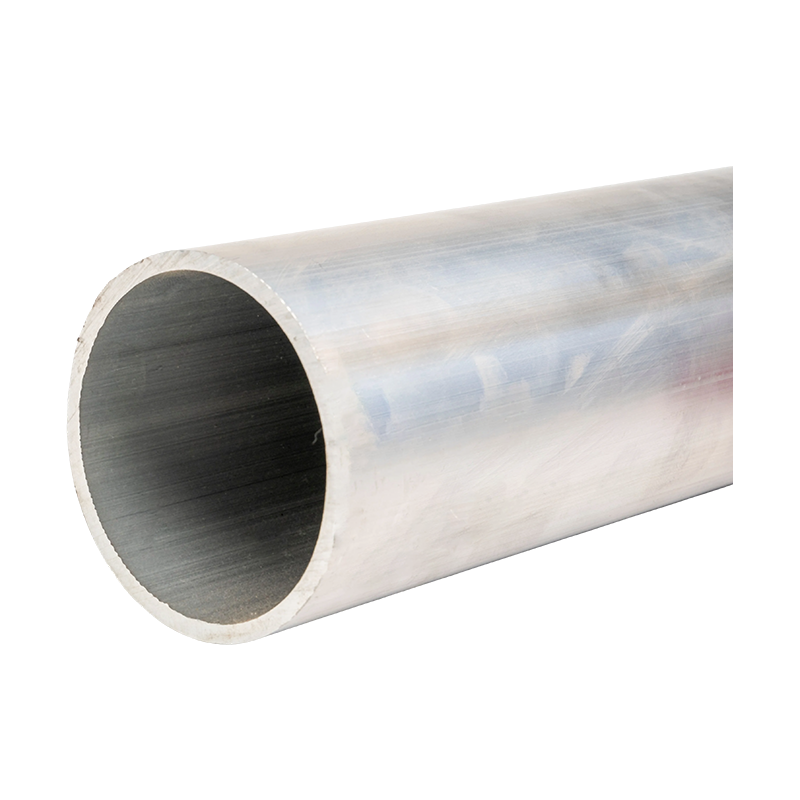
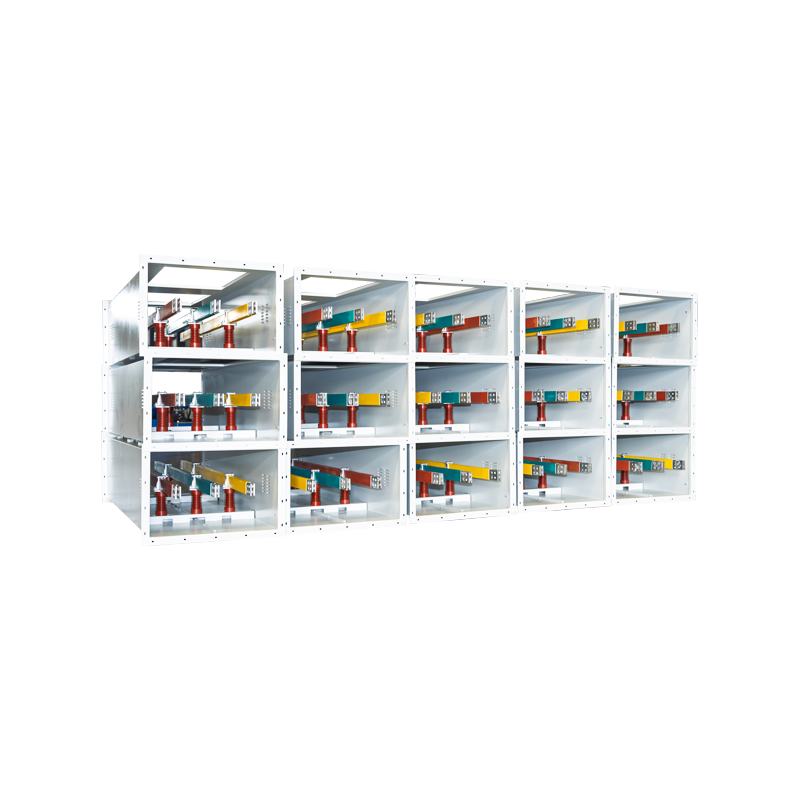
A PTFE tubular busbar is a high-voltage power transmission device that uses a metal tube (typically copper or aluminum) as the conductor, PTFE-oriented film as the primary insulating medium, and a precision mechanical winding process to build a multi-layer shielding structure. Its core features include: PTFE films coated with silicone oil between layers to form a dense, void-free continuous dielectric; a configuration of no fewer than 5 capacitive shielding layers (including zero-potential, graded, and grounded shielding layers); and silicone rubber creepage extension components to achieve optimized electric field distribution and enhanced creepage performance.
This type of busbar operates within a temperature range of -60℃ to 250℃, achieves a protection rating of IP68, and offers excellent corrosion resistance and high/low temperature tolerance, making it purpose-built for extreme operating environments.
Structural Analysis: Precision Design of the Five-Layer Protection System
The insulation structure of the PTFE tubular busbar adopts a layered protection concept from the inside out, with each layer fulfilling specific electrical and mechanical functions:
Conductor Layer and Heat Dissipation Structure
The conductor typically uses T2Y high-purity copper tubing with a copper content of ≥99.90%. Compared to rectangular conductors of the same cross-section, the tubular structure increases surface area by 40% and improves current density distribution uniformity by 60%. In engineering tests, a Φ200×10mm copper tubular busbar carrying 4000A exhibited a temperature rise 15℃ lower than conventional cables. The hollow structure keeps the skin effect coefficient Kf≤1, reducing AC resistance by 35% compared to rectangular conductors; a Φ300×15mm specification can continuously carry 12000A.
Primary Insulation Layer: PTFE-Oriented Film
The primary insulation layer uses PTFE-oriented foil film impregnated with silicone oil. The PTFE molecular chain adopts a helical arrangement with a carbon-fluorine bond energy of 485kJ/mol, giving the material extremely high chemical stability. This insulation layer remains stable across a temperature range of -250℃ to +340℃; after 10 years of operation in environments with an 80℃ daily temperature swing, dielectric loss increases by only 0.003%.
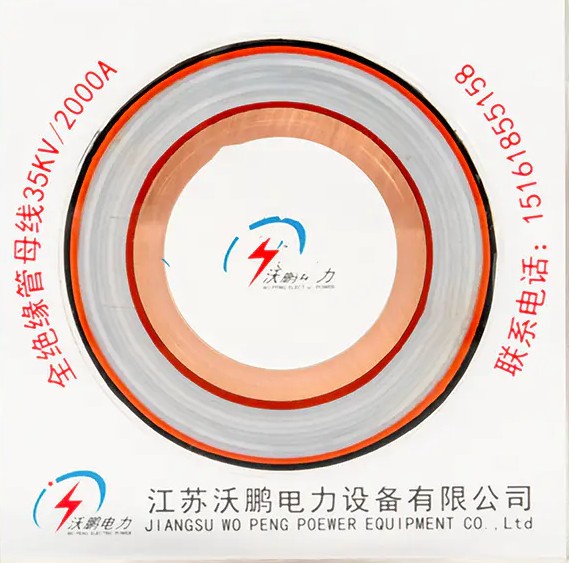
Multi-Layer Capacitive Shielding System
The shielding layer structure typically includes:
- Zero-Potential Shielding Layer: Closely adheres to the conductor surface to equalize the electric field at the conductor surface
- Graded Shielding Layer: A 0.2mm braided copper mesh belt forms a Faraday cage effect, reducing the busbar surface electric field strength from 2.3kV/mm to 0.7kV/mm and completely eliminating corona discharge risks
- Grounded Shielding Layer: Provides final safety grounding protection
The configuration of silicone rubber creepage extension components further optimizes the end electric field distribution, preventing surface discharge.
Protective Outer Layer
The outer layer uses polyolefin polymer sheaths or silicone rubber materials with an IP68 protection rating, completely preventing dust ingress and enabling long-term submerged operation. In salt spray tests, the 10-year corrosion rate is ≤0.01mm/year.
Material Properties: PTFE Adaptability to Extreme Environments
As the primary insulation material for busbars, PTFE's performance advantages stem from its unique molecular structure:
| Performance Indicator | Parameter Value | Engineering Significance |
|---|---|---|
| Temperature Range | -250℃ ~ +260℃ (long-term) | Adapts to extreme cold and high-temperature industrial environments |
| Breakdown Strength | ≥18kV/mm | Ensures high-voltage insulation reliability |
| Surface Energy | 0.019 N/m | Extremely low surface tension, excellent non-stick properties |
| Friction Coefficient | 0.04~0.08 | Self-lubricating characteristics, reducing mechanical wear |
| Chemical Resistance | Resistant to strong acids, strong bases, organic solvents | Suitable for chemical corrosion environments |
| Volume Resistivity | ≥10¹⁸ Ω·cm | Outstanding electrical insulation performance |
Note that PTFE begins significant thermal decomposition at 380℃, so engineering applications should maintain a 10-15% temperature safety margin, keeping operating temperatures below 240℃. As little as 0.1% impurity can reduce the heat distortion temperature by 12℃, making material purity control critical.
Performance Advantages: Why Choose a Tubular Structure
Revolutionary Current-Carrying Capacity Improvement
The hollow tubular structure fundamentally changes current distribution patterns. State Grid UHV project test data shows that tubular busbar solutions improve current-carrying capacity by 200% compared to traditional rectangular busbars. The principle lies in the effective suppression of the skin effect in tubular conductors, resulting in more uniform current distribution and significantly reduced AC resistance.
Structural Advantages in Mechanical Strength
The tubular cross-section's section modulus reaches 4 times that of rectangular busbars. In single-span 13-meter support structures, it can withstand 50kA short-circuit current impact without deformation, reducing bracket usage by 60% compared to traditional solutions. This characteristic gives it irreplaceable advantages in large-span factories, substations, and utility tunnel projects.
Comprehensive Evolution of Environmental Adaptability
The outer protection system passes C5-level anti-corrosion certification. Anti-UV tri-color sheaths exhibit color difference changes ΔE≤3 (CIE Lab* standard) under intense sunlight. The protective outer layer can withstand 30-meter water depth pressure and seawater erosion, with a design service life exceeding 30 years.
Application Scenarios: Coverage from Land to Deep Sea
New Energy Power Generation
In offshore wind farm applications, PTFE tubular busbars replace traditional GIS equipment, reducing substation footprint by 40%. Its anti-vibration design can withstand Category 12 typhoons with a vibration acceleration tolerance of 5g. In photovoltaic power stations, PTFE insulation layers withstand daily temperature swings of 80℃, ensuring reliable DC high-voltage transmission.
Chemical and Corrosive Environments
PTFE can resist virtually all known acids, bases, organic solvents, and oxidizers. In chemical production environments, busbar surfaces do not easily accumulate contaminants, and insulation performance does not degrade due to chemical corrosion. The application of filled PTFE materials in mechanical equipment also solves the problem of lubricating oil contaminating products.
Municipal Infrastructure and Special Projects
In cross-sea tunnels, integrated utility corridors, and other humid or submerged environments, the IP68 protection rating ensures long-term reliable busbar operation. Arched busbar designs can conform to building surfaces with installation tolerances controlled within ±1mm, meeting the dual demands of modern architectural aesthetics and functionality.
Extreme Temperature Environments
In extremely cold regions, PTFE maintains a certain degree of flexibility at -260℃ ultra-low temperatures; in high-temperature industrial environments, its tensile strength at 260℃ remains approximately 5MPa (about 1/5 of room temperature value), with a flexural strength of 1.4MPa, ensuring structural integrity in emergency states.
Technology Evolution and Future Directions
Intelligent Monitoring Integration
Next-generation PTFE tubular busbars can integrate built-in fiber optic temperature monitoring systems for real-time conductor temperature monitoring. Engineering practice shows this technology can provide early warning of potential hot spots 48 hours in advance, reducing failure rates from 0.3/year to 0.02/year. Future iterations will integrate 5G communication modules to enable real-time upload of 128 operating parameters and predictive maintenance.
Green Material Upgrade
New-generation products using recycled copper materials (copper content ≥95% recycled material) reduce carbon footprint by 38% compared to traditional products in carbon-sensitive scenarios such as data centers, aligning with the global trend toward low-carbon power equipment.
Superconducting Technology Exploration
Laboratory-stage high-temperature superconducting copper tubular busbars have already achieved 20000A current-carrying capacity at -196℃, with commercial application expected around 2030, which will redefine the technical boundaries of high-current transmission.
Selection and Operation & Maintenance Essentials
In practical engineering applications, the following technical points merit attention:
- Wall Thickness Selection: For chemical pipeline sealing applications, unfilled PTFE sleeves with wall thickness ≥1mm are recommended; for electrical insulation applications subject to cyclic thermal shock, carbon fiber-reinforced models are recommended, with thermal fatigue life reaching 3 times that of standard models
- Temperature Margin: All high-temperature applications should maintain a 10-15% temperature safety margin
- Partial Discharge Control: Quality products should control partial discharge below 5pC (at test voltage 1.5Ur), superior to the IEC standard limit of 10pC
- Shielding Layer Integrity: The continuity of graded shielding layers directly affects electric field distribution; installation must avoid breakage or wrinkling of copper mesh belts



-
 +86-180 3625 3000
-
 admin@wpbusbar.com
-
 No. 8, Yanjin Road, Chengxi Industrial Park, Shanyang Town, Baoying County, Yangzhou City, Jiangsu Province, China
Copyright © Jiangsu Wopeng Power Technology Co., Ltd.
All Rights Reserved.
 Custom Insulated Bus Bar Manufacturer
Tubular Busbar System Factory
Custom Insulated Bus Bar Manufacturer
Tubular Busbar System Factory