

 EN
EN

 English
 русский
 Français
 Español
 عربى
عربى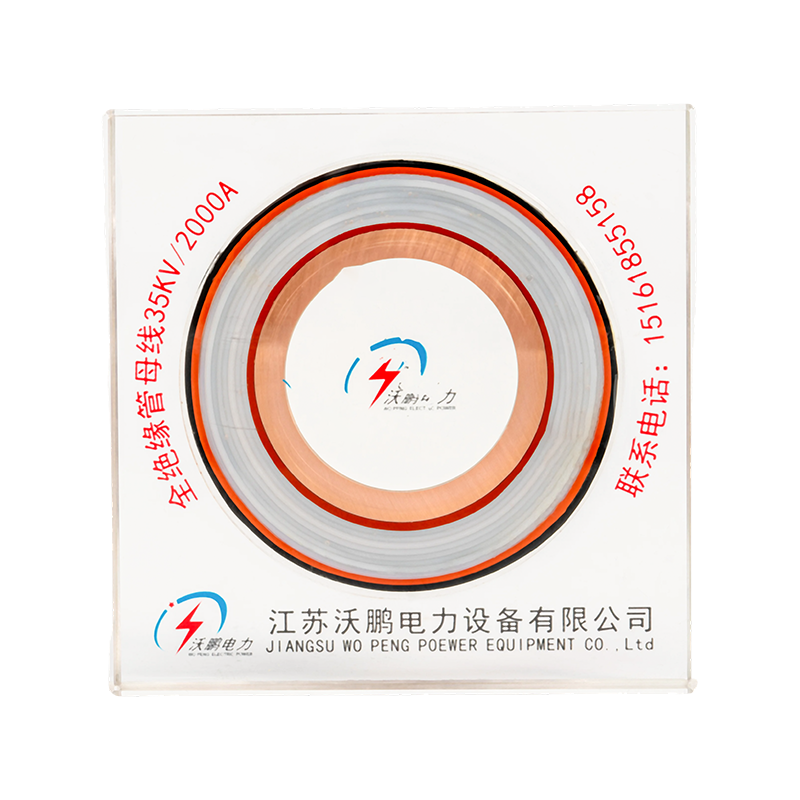
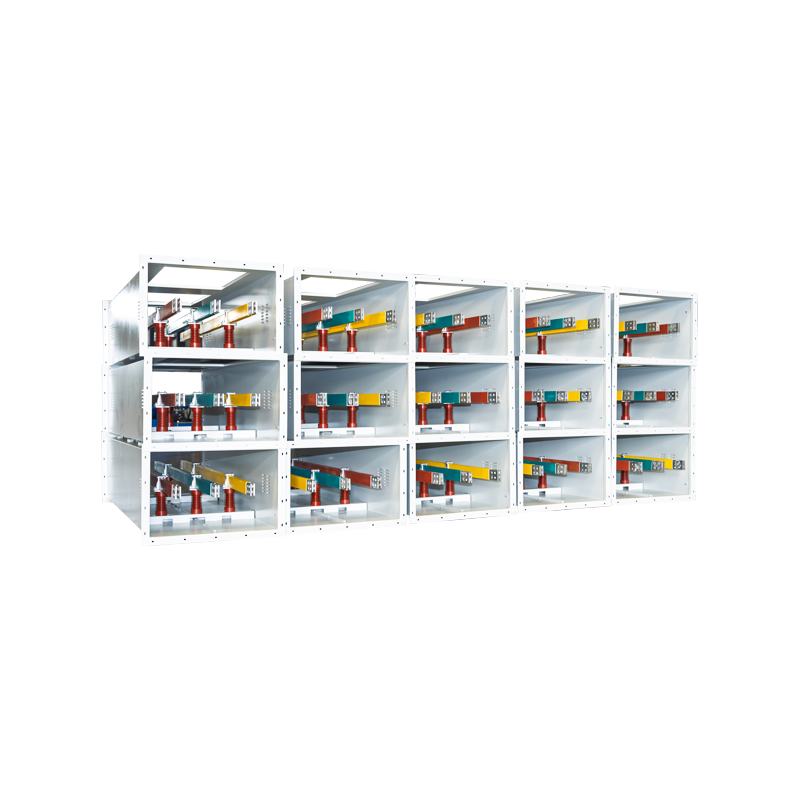


Fully Insulated Busbar vs Bare Busbar: A Practical Selection Guide for Engineers
Content
- 1 The short answer: choose by constraint, not by habit
- 2 How each option insulates the conductor
- 3 Clearance, safety and the 400 V reality
- 4 Side-by-side comparison
- 5 Where fully insulated busbars win
- 6 When silicone or PTFE is the better insulator
- 7 Where bare busbars still make sense
- 8 Cost, installation and lifetime economics
- 9 A five-point selection checklist
- 10 Frequently asked questions
A 35 kV substation retrofit and a 690 V wind farm collector string rarely accept the same answer, yet both teams ask the same question: bare aluminium tube on post insulators, or a fully insulated tubular busbar with epoxy resin, EPDM silicone rubber or PTFE bonded onto the conductor? Four items usually settle it — the phase spacing you can physically build, the current rating you can verify on paper, the installed cost per metre, and the consequences of a contact or fault at that location.
The rule of thumb is blunt. Where space is tight, contamination is real, or people work close to live parts, a fully insulated busbar costs more per metre and less over the life of the installation. Where the run sits in a clean, dry, well-spaced indoor enclosure and carries heavy fault current, a bare busbar on correctly sized insulators remains sound engineering. The sections below explain why, and where the boundary sits.
The short answer: choose by constraint, not by habit
Identify the single constraint that would stop the design from being approved, then specify the busbar that removes it. Most projects point in one of two directions.
A fully insulated busbar is usually the right choice when:
- Phase-to-phase clearances cannot be maintained, for example a retrofit into an existing cabinet, cable tunnel or shaft.
- The route is outdoor, coastal, humid, dusty or exposed to chemicals.
- Technicians or vehicles work near the run with limited barriers.
- Downtime cost per hour is far larger than the material cost difference.
A bare busbar normally wins when:
- The route sits indoors in a dry, controlled room with generous spacing.
- Continuous current is high and heat dissipation is the limiting factor.
- The route will be cut, drilled and re-tapped on site.
- An IP-rated enclosure, barriers and locked access already cover the protection requirement.
How each option insulates the conductor
Bare busbar: the air does the insulating
A bare busbar is a conductor plus air. The insulation duty is shared between the air gap, the post insulators and whatever the enclosure contributes. That is efficient and easy to inspect, but it also means electrical integrity depends on conditions that drift: dust build-up, condensation, humidity, vermin and how often a panel is opened. Remove a cover for maintenance and part of the insulation system leaves with it.
Fully insulated busbar: the insulation travels with the conductor
In a fully insulated tubular busbar, solid insulation is applied directly to the conductor — epoxy resin vacuum casting, EPDM silicone rubber or PTFE — so air is no longer the insulating medium. Phase spacing is governed by surface creepage and insulation thickness instead of a large air gap, which is what allows compact layouts, fewer barriers and a smaller footprint.
Two trade-offs come with it. The insulation adds thermal resistance, so the current rating must be verified at the real ambient and mounting condition rather than assumed equal to a bare tube of the same size. And because the conductor is hidden, sheath quality and joint workmanship carry more weight. For the definition and typical applications, see this overview of fully insulated tubular busbars.
Clearance, safety and the 400 V reality
Clearance is the first place the two options diverge. In low-voltage assemblies the discussion often settles around minimum phase-to-phase spacing in the 60–75 mm range whichever type is used, because at 400 V the enclosure, the tool in a technician's hand and the risk of accidental contact set the practical floor, not the insulation medium. Above 1 kV the air gap a bare conductor needs grows quickly, while an insulated conductor often keeps a much shorter centre distance because the dielectric strength sits in the solid layer.
Two procurement points are worth repeating. A fully insulated busbar is not automatically touch-safe; only a design verified as a complete assembly with barriers, earthing and the correct IP rating can claim that. And a bare busbar is not automatically unsafe; with verified clearances, a rated enclosure and controlled access it runs reliably for decades.
Side-by-side comparison
| Consideration | Bare busbar | Fully insulated busbar |
|---|---|---|
| Insulating medium | Air, plus post insulators and enclosure barriers | Solid insulation bonded to the conductor (epoxy, EPDM, PTFE) |
| Phase spacing | Set by air clearance; grows sharply above 1 kV | Set by surface creepage and insulation thickness; can be much tighter |
| Reliance on the enclosure | High; IP rating and barriers carry part of the insulation duty | Lower; insulation is integral to the conductor |
| Heat dissipation | Best; the conductor surface convects and radiates freely | Reduced; insulation adds thermal resistance, so verify the rating |
| Contamination, humidity, salt spray | Needs cleaning, heating or extra clearance to stay safe | Tolerates contamination better; creepage distance governs the design |
| Field modification and inspection | Easy to cut, drill and re-tap; open joints are visible | Limited to factory lengths and joint kits; conductor stays hidden |
| Cost pattern | Low material cost, higher space and installation cost | Higher material cost, smaller footprint and lower labour |
Where fully insulated busbars win
Outdoor yards, coastal sites, tunnels, compact skids and retrofit projects are where the insulated option usually pays for itself. Taking air out of the insulation duty lets designers shrink phase distances, delete barriers and route conductors through spaces that would never accept bare tube on insulators. The maintenance story changes too: no exposed live metal to clean, no dust layer quietly shortening a gap, and far less to inspect during a shutdown.
Epoxy resin casting for substation and high-voltage duty
Vacuum-cast epoxy resin is the usual answer where the insulation must be rigid, dimensionally stable and able to carry 35 kV class stress through a factory-controlled dielectric layer. It suits station bus connections, switchgear interconnections and routes where mechanical support, creepage distance and long-term stability matter together.
 Epoxy Resin Cast Tubular Bus Bar for Medium and High VoltageFully insulated, non-separable epoxy-cast busbar offers rigid dielectric stability for 10–220 kV switchgear, transformer connections, and high-current distribution routes.View Product →
When silicone or PTFE is the better insulator
EPDM silicone rubber for wind, coastal and high-cycle outdoor duty
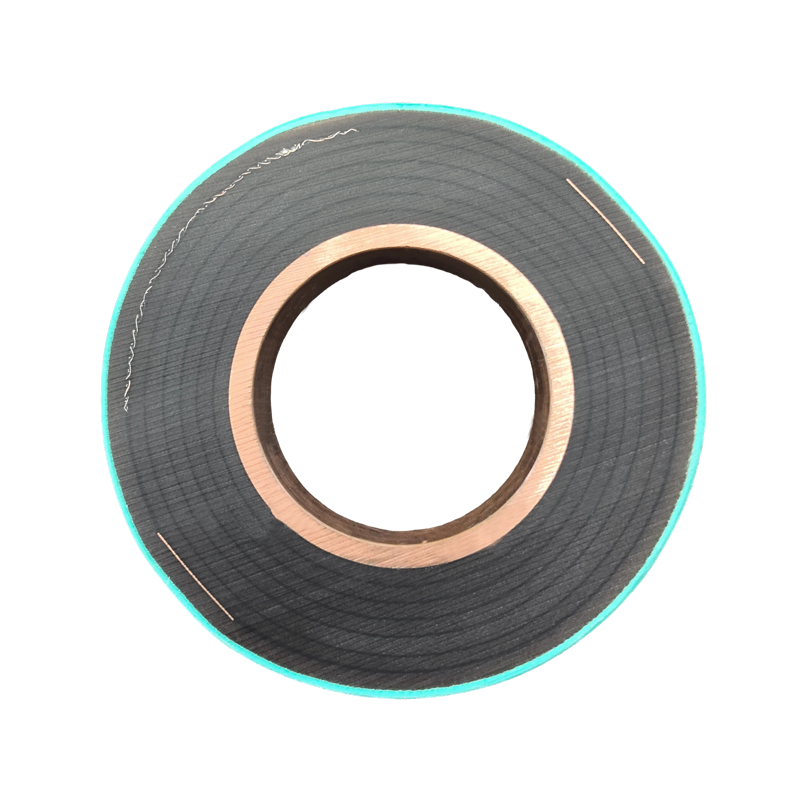
Silicone rubber stays flexible across a wide temperature range and resists UV and surface tracking, which is why it dominates wind turbine runs and outdoor collector lines where vibration, thermal cycling and salt-laden air are normal operating conditions rather than exceptions.
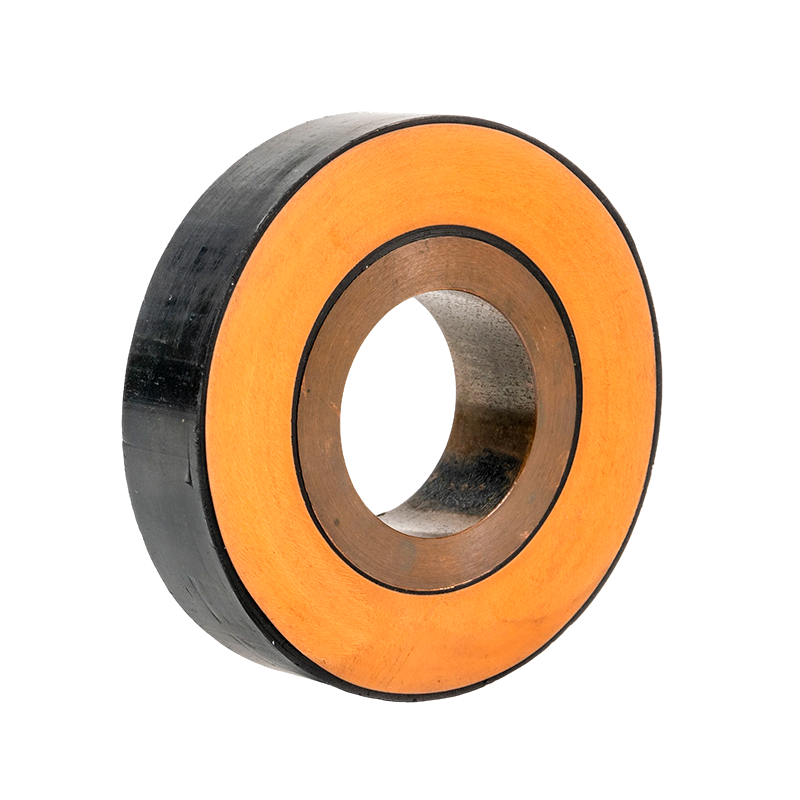 EPDM Silicone Rubber Tubular Bus Bar for High-Voltage DistributionComposite-shielded EPDM tubular busbar withstands UV, ozone, and temperature extremes, suited to 10–35 kV substations, outdoor distribution, renewable energy, and corrosive coastal sites.View Product →
PTFE for aggressive chemical and high-temperature environments
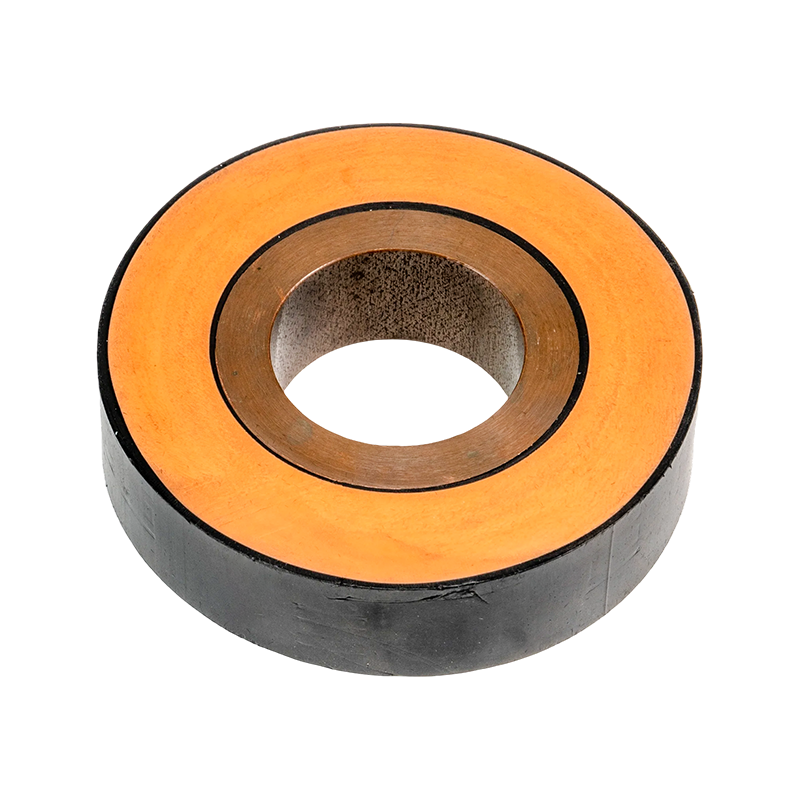
PTFE brings chemical inertness and a higher continuous service temperature, so it appears in plating lines, chemical plants and furnace areas where other sheath materials would age quickly. It costs more, and it is rarely the right answer unless the environment genuinely demands it.
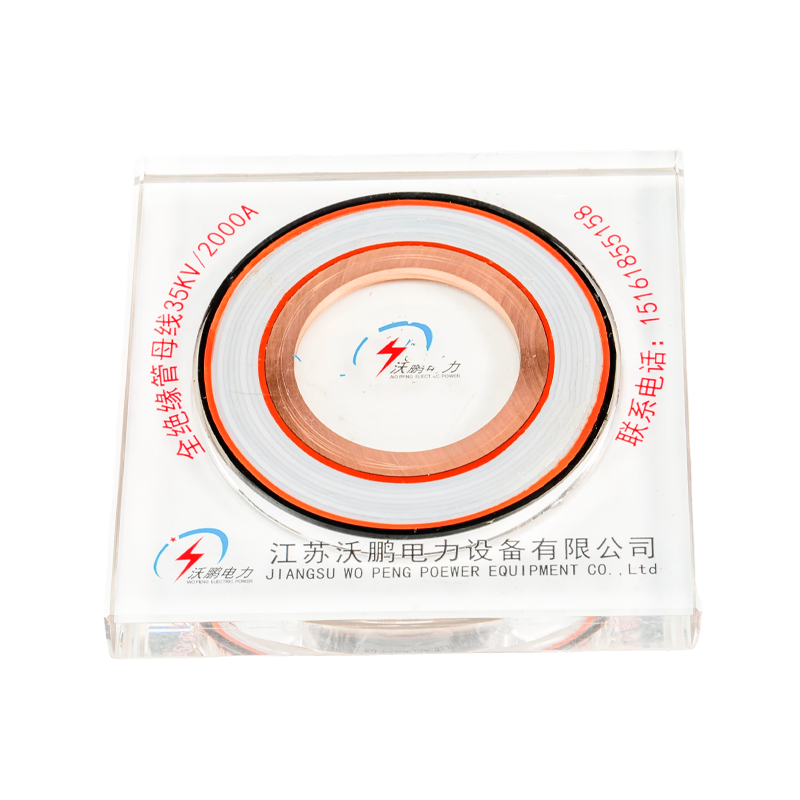 PTFE Tubular Bus Bar for Extreme High-Voltage InsulationWound PTFE film tubular busbar delivers IP68 corrosion resistance and stable insulation for 110–500 kV systems, chemical plants, and high-temperature routes.View Product →
Cost, installation and lifetime economics
Material cost per metre favours the bare busbar almost every time. Installed cost does not always follow. Compare the whole package rather than the price of the conductor:
- Conductor and insulation: higher for the insulated version, most notably in PTFE.
- Supports, insulators and barriers: more of them on the bare version, because air gaps need structure around them.
- Enclosure and floor space: larger for bare busbar; smaller rooms and skids cut civil and steel cost.
- Installation labour: fewer parts to align with factory-made insulated lengths, but joint kits need trained crews.
- Maintenance: cleaning, thermal surveys and torque checks recur indefinitely on open conductors.
- Risk: accidental contact, arc-flash exposure and outage duration never appear on the purchase order but do appear in the budget.
A five-point selection checklist
- Fix the highest system voltage and the required impulse withstand level, then calculate the air clearance a bare conductor would need.
- Measure the space actually available for that clearance, including maintenance access and tool clearance.
- Describe the environment honestly: humidity, salt, dust, chemicals, ambient temperature and solar exposure.
- Verify the current rating for the chosen type at real installation conditions, not at a catalogue reference case.
- Price the full package — conductor, insulation, supports, enclosure volume, installation and expected maintenance over the service life.
Frequently asked questions
Can a fully insulated busbar carry the same current as a bare one of the same conductor size?
Not automatically. The insulation layer adds thermal resistance, so the verified rating is usually lower unless the conductor cross-section is increased. Compare ratings at the same ambient temperature and mounting condition.
Is a fully insulated busbar touch-safe?
Only when the design is verified as a complete assembly with barriers and earthing. Insulation on the conductor is a necessary part of that claim, not the whole of it.
Can the two types be used in one installation?
Frequently, and it is reasonable design practice. Insulated sections suit tight, wet or accessible areas, while bare sections suit the well-spaced, dry, high-current part of the same route.
The comparison is not really insulated versus bare — it is space, environment and access against material cost and heat dissipation. Decide which of those controls the project, verify the numbers for the real site conditions, and the specification usually writes itself. If you are weighing a specific route, send the voltage, current and routing constraints and the engineering team can confirm whether an epoxy, EPDM or PTFE insulated busbar is the practical match — contact the team with your drawings.



-
 +86-180 3625 3000
-
 admin@wpbusbar.com
-
 No. 8, Yanjin Road, Chengxi Industrial Park, Shanyang Town, Baoying County, Yangzhou City, Jiangsu Province, China
Copyright © Jiangsu Wopeng Power Technology Co., Ltd.
All Rights Reserved.
 Custom Insulated Bus Bar Manufacturer
Tubular Busbar System Factory
Custom Insulated Bus Bar Manufacturer
Tubular Busbar System Factory