

 EN
EN

 English
 русский
 Français
 Español
 عربى
عربى
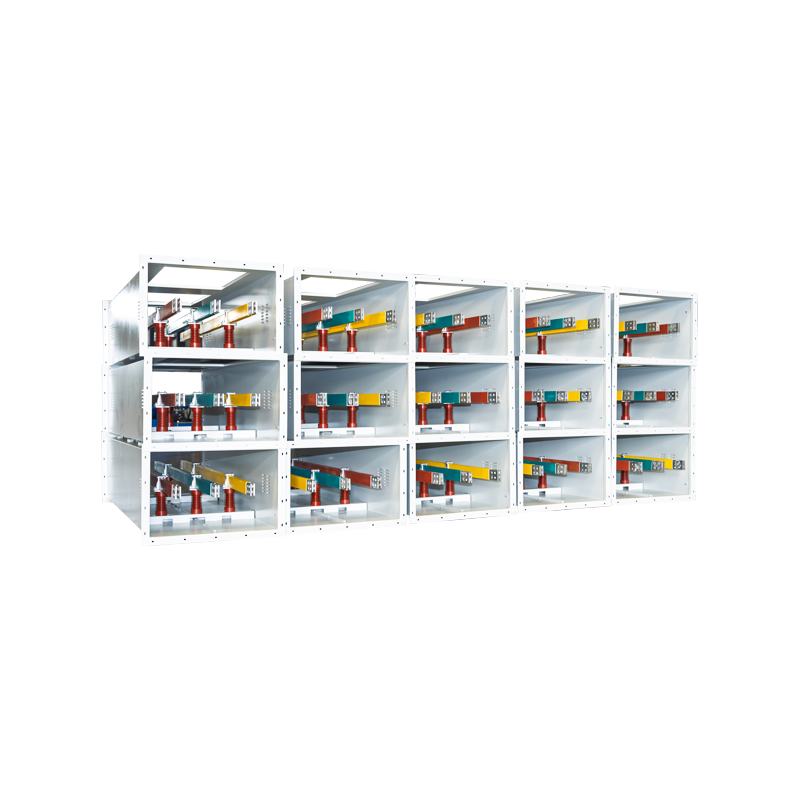


Copper Bar Rating Explained: Ampacity Tables, Derating and Buying Checks
Content
- 1 What a Copper Bar Rating Actually Measures
- 2 What Lowers a Copper Bar Rating in Real Installations
- 3 Copper Bar vs Aluminum Bar: Comparing Ratings Fairly
- 4 Insulated and Cast Bars: Same Copper, Different Rating
- 5 When the Bar Lives Inside a Busway, the System Sets the Rating
- 6 Buying Checklist and Common Failure Points
- 7 FAQ: Copper Bar Rating Questions Buyers Ask
- 7.1 Is copper bar rating the same as ampacity?
- 7.2 What current can a 40 x 10 mm copper bar carry?
- 7.3 Does doubling the bar thickness double the rating?
- 7.4 How much does a 45 °C ambient cost compared with 35 °C?
- 7.5 Can aluminum bars replace copper bars at the same size?
- 7.6 Does tin plating change the rating?
A 100 x 10 mm copper bar is routinely quoted as a 1,500 A conductor. Put that same bar in a sheet-steel enclosure, in a plant room sitting at 45 °C, in a run with four bars per phase, and the current it can carry without exceeding its temperature limit can fall below 1,100 A. The copper did not change. The rating did.
That is the most useful thing to understand about copper bar rating: it is not a fixed property of the metal. It is the outcome of a cross-section, an allowable temperature rise, an ambient condition, a mounting arrangement, and a standard that defines how the number was produced. Two suppliers can quote the same bar at 900 A and 1,300 A and both can be correct, because they are answering slightly different questions.
What follows is a practical way to read copper bar ratings, compare them honestly against aluminum, and spot the specification gaps that turn into hot joints in the first hot summer of operation.
What a Copper Bar Rating Actually Measures
A copper bar rating, or ampacity, is the steady-state current at which the bar reaches its permitted temperature in a stated ambient. Three things are always implied, and all three must match before two figures can be compared: the cross-section, the permitted temperature or temperature rise, and the surrounding conditions.
The classic reference for rectangular copper bars is DIN 43671, which tabulates current-carrying capacity against temperature rise for bare bars in still air. Assembly standards take a different route. IEC 61439-1 sets temperature-rise limits for the complete assembly, UL 67 and UL 891 do the same for panelboards and switchboards, and IEC 61439-6 covers busway systems. Under those standards the rating of a bar is really the rating of the assembly it lives in, confirmed by test rather than by table.
Material assumptions matter too. A bar sold as copper is normally electrolytic tough pitch copper with a conductivity of at least 58 MS/m, which is the 100 percent IACS reference. Stock with 95 percent IACS runs roughly 5 percent hotter at the same current, which is one reason mill certificates are worth requesting.
| Bar size (mm) | Approx. amps at 35 K rise | Approx. amps at 65 K rise | Typical use |
|---|---|---|---|
| 20 x 5 | 230 | 330 | Small distribution boards, control panels |
| 30 x 5 | 320 | 445 | Panel feeders, short runs |
| 40 x 5 | 400 | 555 | General low voltage distribution |
| 50 x 10 | 640 | 890 | Main low voltage feeders |
| 63 x 10 | 750 | 1,040 | Switchboard main bars |
| 80 x 10 | 900 | 1,250 | Transformer to board links |
| 100 x 10 | 1,100 | 1,520 | High-current main runs |
What Lowers a Copper Bar Rating in Real Installations
Once a bar leaves the free-air table, five factors usually decide the real number.
- Ambient temperature. Tables assume 35 °C. A room at 45 °C costs roughly 10 percent of usable current, and 55 °C costs around 20 percent.
- Mounting and enclosure. A closed IP54 enclosure can take another 10 to 20 percent compared with free air. Edge-on bars cool better than flat-stacked bars of the same section, and vertical runs with open vents perform better than horizontal ones in dead air.
- Parallel bars per phase. Two bars are not twice one bar. Proximity effects and uneven sharing typically deliver about 1.7 times the single-bar figure, roughly 2.4 times for three bars, and about 2.8 times for four.
- Frequency and skin effect. At 50 Hz the current in copper concentrates within roughly 9 mm of the surface. Above about 10 mm of thickness, extra width buys more ampacity than extra thickness.
- Surface condition and coating. Heat leaves a bar by convection and radiation. Dark, oxidized surfaces radiate more than bright or heavily tinned ones, so plating can add a small thermal penalty even when it is the right choice for corrosion and joint life.
Altitude belongs on the list as well. Above roughly 2,000 m, thinner air reduces convective cooling, and assemblies tested at sea level should be derated accordingly.
Copper Bar vs Aluminum Bar: Comparing Ratings Fairly
Aluminum is the natural alternative when weight and cost drive the decision, but the comparison only holds if it is made on the same basis.
Copper sits at 100 percent IACS while standard aluminum conductor grades sit near 61 percent. Matching a copper bar therefore needs roughly 1.6 times the cross-section, but the aluminum bar weighs about half as much. In practice aluminum wins on structure loading, support count and material cost, while copper wins on space: a copper run fits into a tighter trench or switchgear compartment.
Two details decide whether an aluminum substitution works on site. First, joints. Aluminum forms an insulating oxide within minutes and creeps under sustained bolt pressure, so terminations need proper surface preparation, correct torque, and bimetallic transition plates where aluminum meets copper. Second, expansion. Aluminum expands about 30 percent more than copper for the same temperature change, which matters on long runs with rigid terminations.
For medium and high voltage, tubular profiles change the arithmetic. A tubular alloy bar exposes more cooling surface per unit of cross-section than a flat bar, so the ampacity gap against copper narrows considerably.
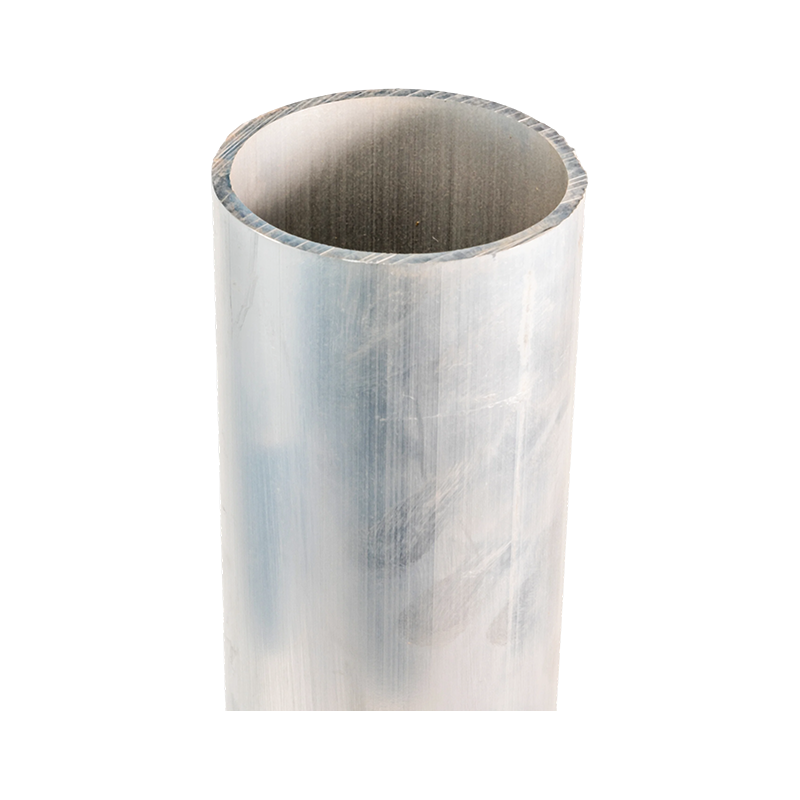 Ultra-high Voltage Magnesium-Aluminum Alloy Tubular Bus BarThe Ultra-high voltage magnesium-aluminum alloy tubular bus bar is a key conductive component specifically designed for ultrahigh voltage power transmission and transf...View Product →
Insulated and Cast Bars: Same Copper, Different Rating
Insulation changes both sides of the rating equation. It removes convective cooling surfaces, but it also allows the conductor to run hotter, because the current-carrying part is no longer touch-accessible and the insulation system defines the temperature class.
That is why a fully insulated tubular bar can carry more current than a bare bar of the same section inside the same enclosure: the permitted conductor temperature is higher, and the enclosure can often be made smaller. The trade-off is that the insulation becomes the limiting component, so its temperature class, not the copper, sets the published rating.
| Insulation system | Typical continuous conductor temperature | Best fit | Watch-outs |
|---|---|---|---|
| EPDM / silicone rubber | Around 90 to 105 °C | Outdoor and moderately polluted substations | UV and ozone ageing; confirm the declared class |
| Epoxy resin casting | Around 105 to 130 °C | Compact indoor switchgear, humid or corrosive areas | Casting voids, thermal cycling; test the finished part |
| PTFE | Commonly above 150 °C | High-temperature and chemically aggressive areas | Cost; surface abrasion during installation |
 Epoxy Resin Casting Tubular Bus BarWOPENG Epoxy Resin Casting Tubular Bus Bar is a power transmission product integrally formed using a fully automated two-component vacuum injection molding machine, wh...View Product →
When the Bar Lives Inside a Busway, the System Sets the Rating
In low voltage distribution the copper bar rating is rarely used on its own. A busway is rated as a system: conductor, joints, insulation, enclosure and declared ambient are tested together under IEC 61439-6 or UL 857, and the nameplate figure applies to that whole assembly.
This has a practical consequence. An 800 A compact busway often uses a conductor cross-section that a free-air table would credit with well over 800 A. The difference is not margin for error; it is the share consumed by joint resistance, enclosure losses and the standard's ambient assumption.
Sandwich-type and high-density compact busways reduce that share by keeping the phases close together, which lowers reactance and voltage drop and improves current sharing between parallel conductors. That matters more, not less, in installations with harmonic-rich loads, where the impedance of the run shapes how the current divides.
If you are weighing busway against cable or bare bar for a medium or low voltage distribution board, this guide on how to choose the right bus bar for medium and low voltage walks through the same decision with project-level detail.
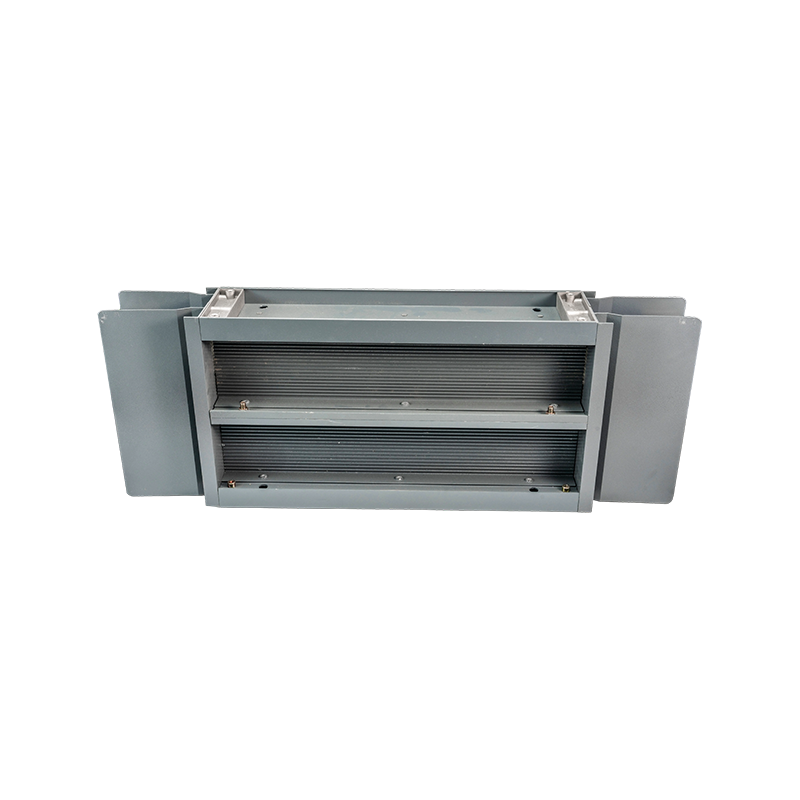
 High-density Compact BuswayHigh-density compact busway belongs to the category of low-voltage cast-resin busway products. It adopts a densely arranged structural design, characterized by compact...View Product →
Buying Checklist and Common Failure Points
Before accepting a quotation that claims a copper bar rating, ask for the following.
- Conductivity evidence: a mill certificate showing at least 58 MS/m, or 100 percent IACS.
- Dimensions and tolerance: width and thickness inside the applicable standard tolerance, with sharp edges removed.
- Plating specification: tin thickness typically 5 to 10 micrometres where corrosion resistance or joint life matters.
- Temperature rise data: a test report for the assembly, not only a table value for a single bar.
- Joint hardware: documented torque values, belleville or spring washers, and a plan for thermal cycling checks.
The most expensive failures are quiet ones. A bar one size smaller than specified, 80 x 10 mm instead of 100 x 10 mm, removes about 20 percent of the copper cross-section and pulls the rating down by roughly 18 percent, while the purchase order still looks correct on paper. Aluminum quietly substituted for copper in the same enclosure, or copper of lower conductivity, shows up as a hot joint two or three years later. Loose joints and mixed-metal connections rarely fail at commissioning; they fail under load cycling, which is precisely when the plant cannot afford downtime.
If you have a drawing, a load profile and an ambient condition, you can send the details to our engineering team and get a bar or busway recommendation that matches the installation rather than the catalogue page.
FAQ: Copper Bar Rating Questions Buyers Ask
Is copper bar rating the same as ampacity?
In everyday use, yes. Technically, ampacity is the current that produces a defined temperature rise in a defined ambient, so the number is meaningless without those two conditions attached.
What current can a 40 x 10 mm copper bar carry?
Roughly 800 to 900 A at a 65 K rise in free air, and closer to 600 A inside a closed enclosure at 45 °C ambient. Verify with the assembly standard or a temperature rise test before designing to it.
Does doubling the bar thickness double the rating?
No. Going from 5 mm to 10 mm at the same width typically adds 45 to 55 percent, because thickness adds cross-section but very little surface area, and skin effect limits how much of the extra copper actually carries current.
How much does a 45 °C ambient cost compared with 35 °C?
About 10 percent of usable current in a typical indoor arrangement, and more where ventilation is poor or several runs share the same space.
Can aluminum bars replace copper bars at the same size?
Not at the same size. The same cross-section loses roughly 40 percent of its capacity, so aluminum substitutions need a larger profile, correct joint preparation and bimetallic transition hardware.
Does tin plating change the rating?
Only slightly. Tin reduces radiative cooling a little, but the effect is small compared with ambient temperature and enclosure conditions. The real benefit of plating is corrosion resistance and a more stable joint interface.
A copper bar rating means something only when the cross-section, the temperature limit, the ambient and the mounting arrive with it. Ask for the test conditions before comparing two numbers, size for the worst ambient the room will see in July rather than the average printed on the drawing, and treat the joints, not the bars, as the part of the system most likely to fail first.



-
 +86-180 3625 3000
-
 admin@wpbusbar.com
-
 No. 8, Yanjin Road, Chengxi Industrial Park, Shanyang Town, Baoying County, Yangzhou City, Jiangsu Province, China
Copyright © Jiangsu Wopeng Power Technology Co., Ltd.
All Rights Reserved.
 Custom Insulated Bus Bar Manufacturer
Tubular Busbar System Factory
Custom Insulated Bus Bar Manufacturer
Tubular Busbar System Factory