

 EN

 English
 русский
 Français
 Español
 عربى

Tubular vs Rectangular Busbar: How to Choose by Voltage, Current, Span and Cost
Content
- 1 The Verdict, Sized Up Side by Side
- 2 Why a Hollow Tube Uses Metal Better Than a Solid Bar
- 3 Corona and Surface Field: Round Wins Above 35 kV
- 4 Spans, Vibration and Short-Circuit Forces
- 5 Where Rectangular and Flat Bars Still Win
- 6 A Selection Checklist You Can Send to a Supplier
- 7 Frequently Asked Questions
- 8 Choosing the Shape That Fits the Job
A 35 kV collector substation needs a 2,000 A link running 18 m from the incoming gantry to the switchgear building. With rectangular flat bars, that run needs a support roughly every 1.2 m, plus an enclosure or busway to keep weather and clearances under control. With tubular busbars, the same conductor spans 5 m between post insulators in open air and needs nothing wrapped around it. That single difference, how far the metal can travel before it needs help, usually settles the tubular versus rectangular busbar question long before anyone opens a price list.
The short version: rectangular and flat bars own the inside of low-voltage panels and medium-voltage switchgear, where runs are short, joints are frequent and the enclosure handles weather and clearances. Tubular busbars own outdoor yards, long spans, high currents and anything from roughly 35 kV upward, where a round profile keeps surface field low and a hollow section keeps metal where the current actually flows. The rest is detail, but that detail decides installation cost, losses and maintenance for the next 30 years.
The Verdict, Sized Up Side by Side
Read the comparison below as a filter, not a rulebook. Two or three rows will usually rule out one shape for your project, and only then is it worth comparing quoted prices.
| Criterion | Tubular busbar | Rectangular / flat busbar |
|---|---|---|
| Typical home | Outdoor yards, 35 kV to 220 kV substations, wind collector lines | LV panels, 0.4 kV to 35 kV switchgear, busway, converter links |
| Usual current band | About 1,000 A to 12,000 A per phase | About 100 A to 6,300 A per phase |
| Metal efficiency at high current | High, the hollow core removes idle metal | Drops once sections pass about 1,000 mm² or bars are stacked in parallel |
| Reactance on long runs | Lower for the same current and spacing | Higher and very sensitive to phase spacing |
| Corona at high voltage | Good, continuous round profile | Poor unless insulated, screened or fitted with edge grading |
| Unsupported span outdoors | 4 m to 6 m typical | 1 m to 1.5 m, often less |
| Jointing | Welded or clamped, needs skilled labour | Bolted lap joints, easy to torque and inspect |
| Cost driver | Supports, welding, corona rings, erection time | Enclosure, bar count, plating, panel labour |
Why a Hollow Tube Uses Metal Better Than a Solid Bar
At 50 Hz, alternating current crowds toward the surface of a conductor. The skin depth, where current density falls to about 37% of its surface value, is roughly 9.4 mm in copper and 12 mm in aluminium at 20 °C. Metal deeper than that still has to be bought, still has to be cooled, and carries very little. This is why large rectangular sections are normally built as several thin bars instead of one thick one.
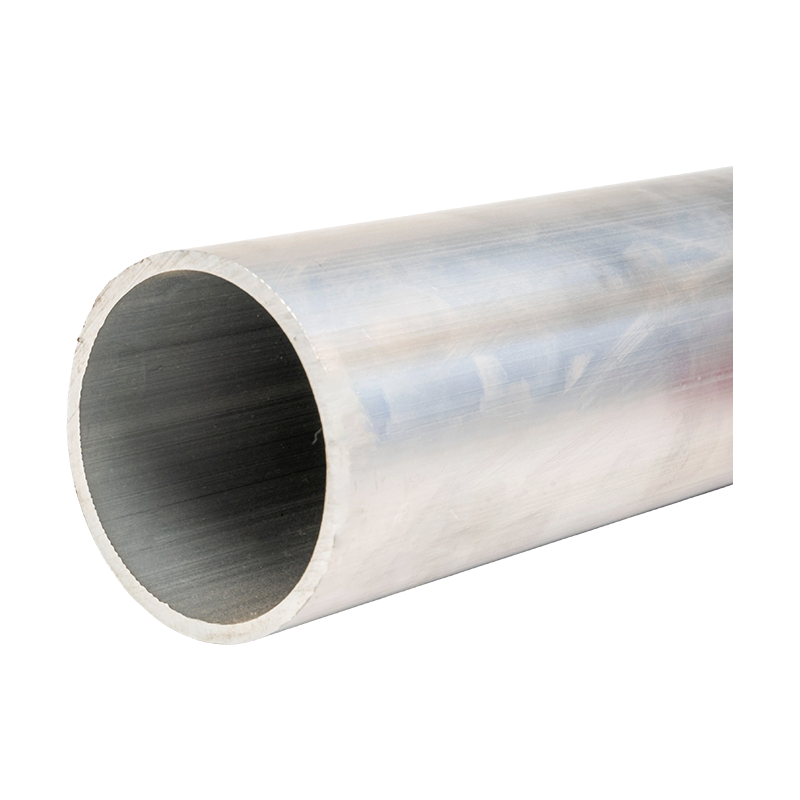
A tube solves the problem with geometry rather than with more copper. A 100/80 mm aluminium tube puts about 2,827 mm² of metal into a 10 mm ring, right where the current flows, and leaves the idle centre empty. The empty centre also weighs nothing, which shows up later in insulator loads, steelwork and erection time.
Parallel flat bars carry a second penalty: proximity effect. In a stack of three bars per phase, current sharing is rarely equal, the outer bars usually take more than the middle one, and the stack never quite delivers three times the rating of a single bar. IEC 61439-1 requires the real arrangement to be verified by temperature-rise test, and that is exactly where catalogue bar tables and measured panel performance part company.
Corona and Surface Field: Round Wins Above 35 kV
A rectangular bar has four edges with a radius of roughly 1 mm. In a 35 kV or 110 kV yard those edges see a local field several times higher than the flat face, and in rain, dust or morning dew that is where corona starts. Corona is not cosmetic: it brings audible noise, radio interference and ozone that attacks elastomer insulation, and it slowly erodes the conductor surface.
A tube spreads the field across a large, continuous radius. Choosing a diameter of 50 mm to 150 mm and keeping the surface gradient well under the dry and wet corona inception values is standard practice for outdoor work from 35 kV to 220 kV. Terminations still need corona rings, and fittings must be free of burrs and sharp bolt ends, because one point can dominate the whole field distribution.
When a rectangular bar has to work at these voltages, it must be insulated or screened, usually in cast resin or heat-shrink. At that stage you are no longer comparing bare metal shapes but two insulated systems, and the flat-bar price advantage tends to disappear.
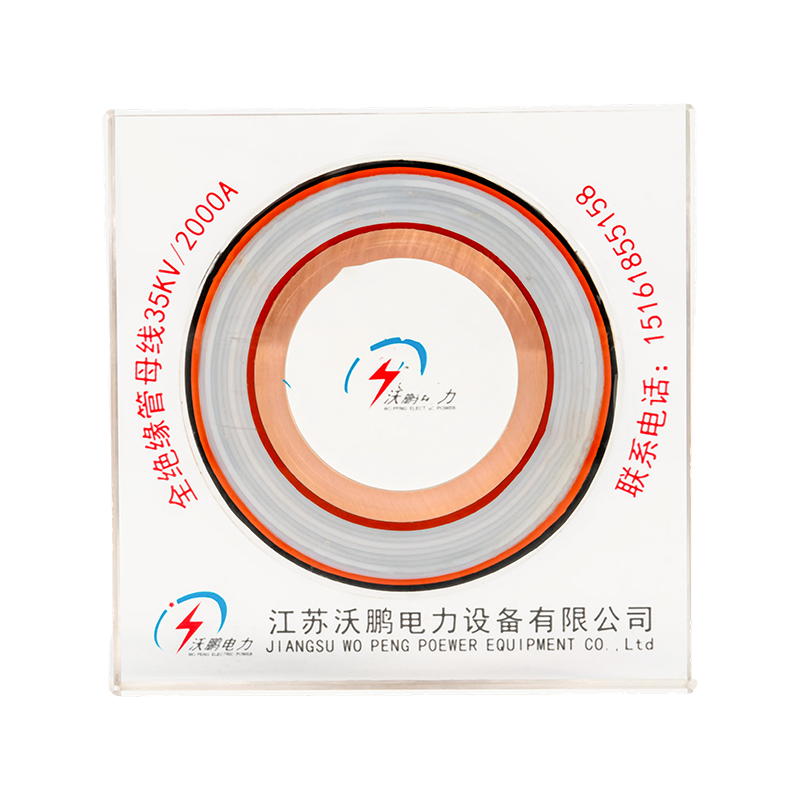
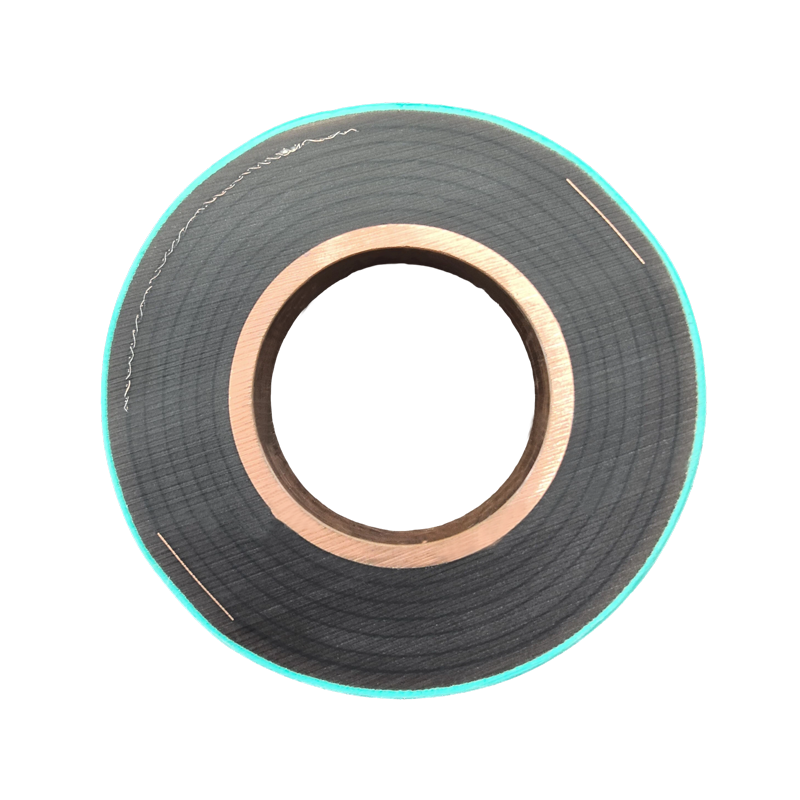 Epoxy Resin Cast Tubular Bus BarFully insulated, shielded tubular bus bar for high-voltage runs, available in 10–220 kV classes with one-shot molded joints and long service life.View Product →
Spans, Vibration and Short-Circuit Forces
A tube bends the same way in every direction. A flat bar does not: a 100×10 mm bar on edge is about ten times stiffer in its strong axis than in its weak axis, so wind, seismic movement and fault currents bend it in two directions at once. Long outdoor runs of flat bar therefore need more supports, more bracing and sometimes dampers, and every one of those items is a field connection that can loosen.
Fault current adds a load that is easy to underestimate. Using the standard relation F = 2×10⁻⁷ × I² / d, a 100 kA peak current at 300 mm phase spacing produces roughly 6.7 kN per metre of busbar, reversing direction several times during a multi-cycle fault. IEC 60865-1 sets out how to calculate the thermal and mechanical effects; in practice, a tube spanning 5 m usually needs fewer insulators than a flat-bar arrangement holding the same fault level.
Put the mechanical requirements into the purchase order, not into a verbal note. Wall thickness tolerance, ovality and straightness all affect the cantilever load case, and drawn tube is commonly quoted at around ±10% on wall, which is worth checking against your worst-case ice and wind assumptions.
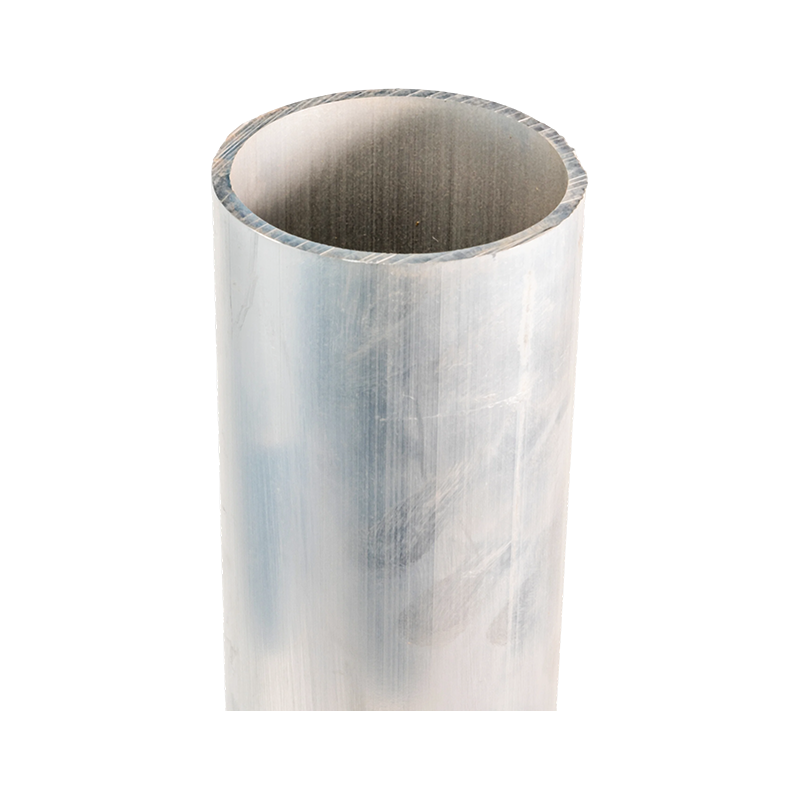 UHV Magnesium-Aluminum Alloy Tubular Bus BarLightweight high-strength tubular bus bar for 500–1000 kV systems, with current ratings up to 12000 A and spans up to 8 m.View Product →
Where Rectangular and Flat Bars Still Win
Below 1 kV, flat bars are hard to beat. They fit inside a 600 mm wide panel, bend on a standard press brake, drill for a bolted lap joint in minutes, and come with decades of temperature-rise test data behind them. Busway pushes the same idea further: thin rectangular conductors, factory insulated and stacked into a compact sandwich, delivering 630 A to 6,300 A in a footprint no tube can match.
Jointing is the quiet cost item. A flat-bar lap joint is a plated, bolted connection that can be torqued, inspected and reopened. A tubular joint is usually welded or made with a clamp designed for one diameter, needs qualified welders, and on aluminium demands careful oxide removal before welding. If the maintenance team expects to unbolt a section on a Sunday afternoon, that difference matters more than the catalogue price.
Rectangular conductors also hold their own in converter and rectifier links, where several thin interleaved bars reduce AC resistance and inductance more effectively than one thick tube.
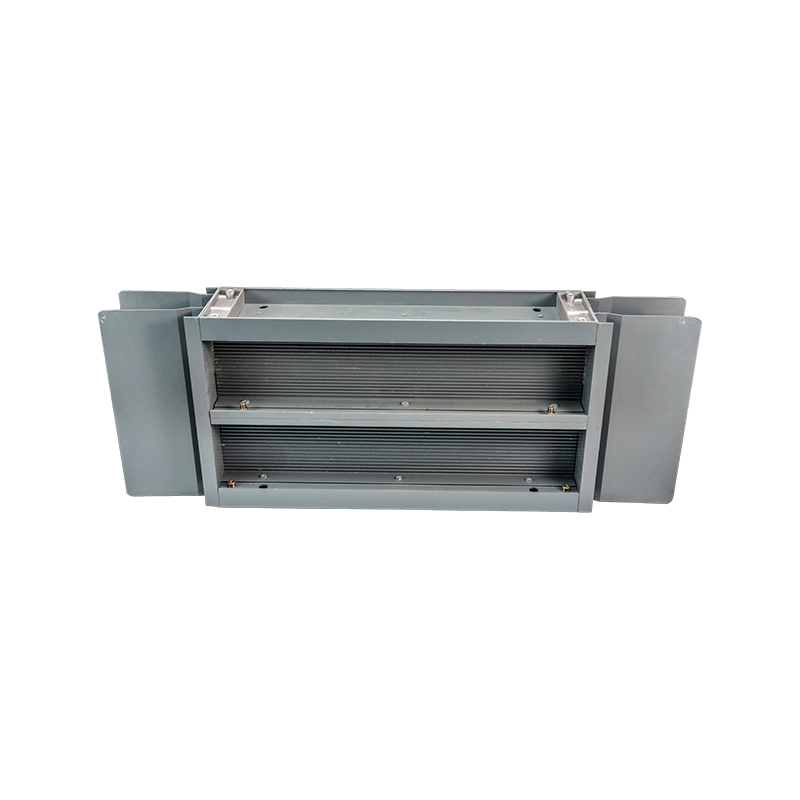 High-Density Compact Cast-Resin BuswayLow-voltage cast-resin busway for 400–690 V distribution, offering 400–5000 A ratings and IP65 protection in a compact, maintenance-free design.View Product →
A Selection Checklist You Can Send to a Supplier
Work through these in order. Most projects stop at question three and never reach the price comparison stage.
- Voltage class and location: indoor enclosure or open outdoor yard.
- Continuous current at the real ambient temperature, altitude and enclosure, not the catalogue figure.
- Fault level as both thermal I²t and peak current, with the clearing time stated.
- Support span, available steelwork, wind and seismic loads, and vibration sources nearby.
- Surface field and corona performance, including termination hardware and ring design.
- Joint method, access for welding or torqueing, and future maintenance strategy.
- Total installed cost, including supports, enclosures, plating, welding, testing and lifetime losses.
- Buy-spec tolerances: wall thickness, ovality, straightness, conductor temper and plating thickness.
For medium and low voltage work, the same logic is set out in more detail in this guide on how to choose the right bus bar for medium and low voltage systems.
Frequently Asked Questions
Can I swap flat bars for a tube inside an existing LV panel?
Almost never without re-testing. Clearances, bending radius, joint positions and heat build-up inside the enclosure all change, and the panel's type test or verified design no longer covers the modification.
Is a tubular busbar always more expensive?
Not per ampere on high-current outdoor work. Aluminium tube is often cheaper than a large copper bar stack for the same rating, and it saves supports and enclosure. The cost moves to welding, corona rings and installation skill.
Does a larger diameter always mean more current?
No. Wall thickness, mounting arrangement, ambient temperature, the proximity of parallel tubes and the surface finish all shift the rating by double-digit percentages, which is why tested data for the exact layout is the only figure worth quoting.
Choosing the Shape That Fits the Job
Pick the tubular busbar when the run is long, the current is high, the location is outdoors and the voltage is 35 kV or more; the round profile lowers reactance, suppresses corona and cuts the number of supports. Pick rectangular or flat bars when the work sits inside an enclosure, the spans are short, joints are frequent and cost per metre rules. Neither shape is obsolete, they simply answer different questions.
If you are still weighing the two for a specific yard, panel or wind project, send the voltage, current, fault level and span to our engineers through the contact page and we will tell you which shape the numbers actually support.



-
 +86-180 3625 3000
-
 admin@wpbusbar.com
-
 No. 8, Yanjin Road, Chengxi Industrial Park, Shanyang Town, Baoying County, Yangzhou City, Jiangsu Province, China
Copyright © Jiangsu Wopeng Power Technology Co., Ltd.
All Rights Reserved.
 Custom Insulated Bus Bar Manufacturer
Tubular Busbar System Factory