

 EN
EN

 English
 русский
 Français
 Español
 عربى
عربى
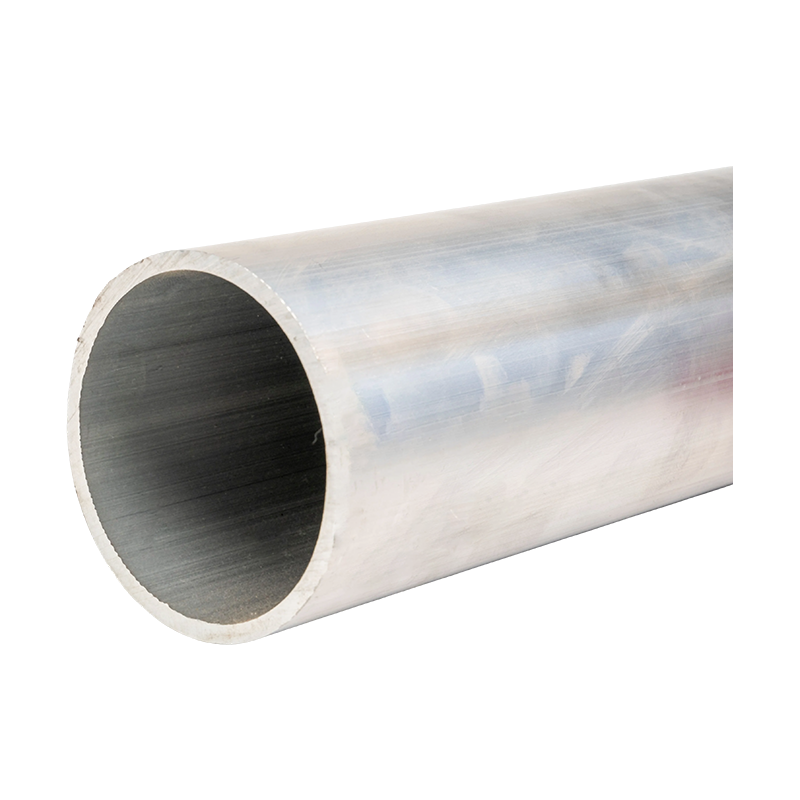
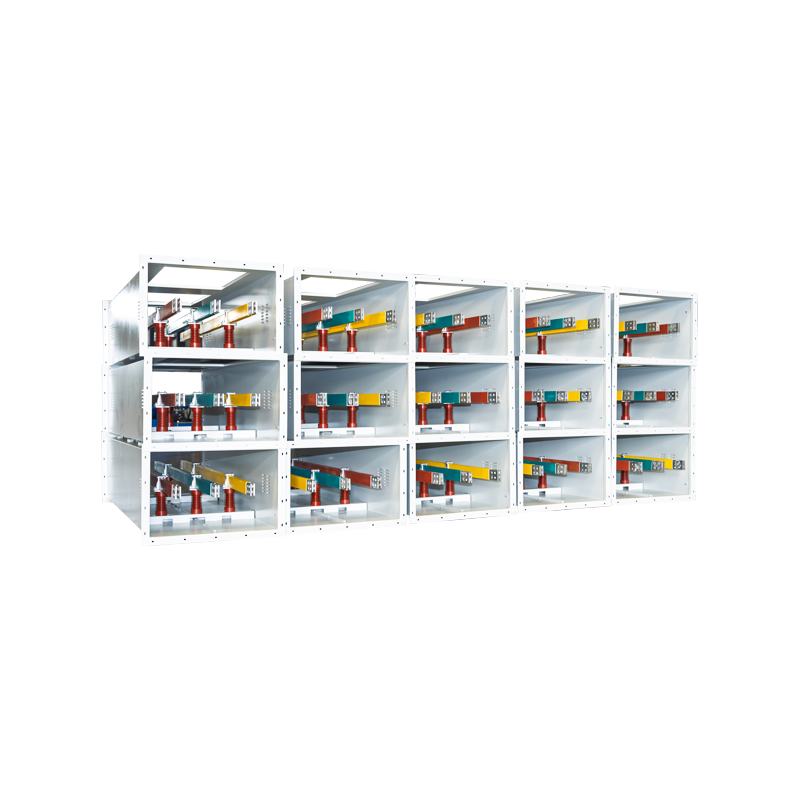


How to Select the Right Aluminum Alloy Tubular Bus Bar?
How to Select the Right Aluminum Alloy Tubular Bus Bar
The most direct answer: select your aluminum alloy tubular bus bar based on four core parameters — alloy grade, outer diameter and wall thickness, aluminum tubular busbar current rating, and the environmental conditions of your installation site. Getting these four right eliminates the most common causes of premature failure, thermal overload, and mechanical collapse in outdoor substation and transmission structures. This guide walks through each factor with specific data, industry comparisons, and practical guidance to help engineers, procurement teams, and project managers make well-informed decisions.
Why Aluminum Tubular Bus Bars Are the Preferred Choice for High-Voltage Installations
Aluminum alloy tubular bus bars have largely replaced solid and flat conductor formats in medium and high voltage outdoor switchyards, substations, and transmission structures. The reasons are well-supported by engineering data.
A hollow tubular profile uses material more efficiently than a solid bar of equivalent cross-section. For a given current-carrying capacity, a tubular conductor can achieve the same skin-effect performance with 30–40% less material mass compared to a solid rod. This translates directly into reduced structural load on support insulators and gantry steelwork — a significant advantage in long-span substation bus arrangements where spans of 8 to 15 meters between supports are typical.
Aluminum alloys also offer a strength-to-weight ratio that steel and copper cannot match at comparable cost levels. For outdoor applications subject to wind, ice loading, and seismic events, this mechanical performance is not merely a convenience — it is a structural safety requirement. The tubular cross-section provides high section modulus and moment of inertia per unit weight, enabling longer spans without excessive sag or vibration-induced fatigue at clamp attachment points.
Corrosion resistance is another practical advantage. The natural oxide layer on aluminum alloy surfaces provides adequate protection in most atmospheric environments. In coastal or heavily industrial environments, anodizing or special surface treatments can be specified to extend service life beyond 30 years with routine maintenance.
Understanding Aluminum Alloy Grades Used in Tubular Bus Bars
Not all aluminum alloys perform equally in bus bar applications. The selection of alloy grade affects electrical conductivity, tensile strength, weldability, and resistance to stress corrosion. The three most commonly specified alloy series for aluminum alloy tubular bus bar applications are the 1xxx, 6xxx, and the less common 5xxx series.
1350 Alloy (Al 99.5% — 1xxx Series)
Alloy 1350-H14 or H19 is the electrical conductor standard grade. It contains a minimum of 99.5% aluminum and achieves an electrical conductivity of approximately 61% IACS (International Annealed Copper Standard). Tensile strength is moderate — typically 95–130 MPa depending on temper — which limits its use to shorter spans or applications where structural loads are modest. Its primary advantage is maximum conductivity per unit cross-section, making it the preferred alloy when minimizing resistance losses is the overriding design goal.
6061 and 6063 Alloy (Al-Mg-Si — 6xxx Series)
The 6xxx series alloys represent the most widely used group for structural bus bar applications. Alloy 6061-T6 offers tensile strength of 260–310 MPa and yield strength of approximately 240–276 MPa, while maintaining electrical conductivity of around 43% IACS. Alloy 6063-T6 provides slightly lower strength (tensile strength ~205–240 MPa) but higher conductivity (~53% IACS) and excellent extrudability, making it the preferred choice for complex tubular profiles.
In most substation bus bar projects, 6063-T6 strikes the most practical balance between electrical performance and mechanical load-bearing capacity. It also exhibits good weldability using MIG or TIG processes, which is critical for field joints and expansion loops.
6101 Alloy (Al-Mg-Si — High Conductivity Structural)
Alloy 6101-T61 or T64 is specifically developed for electrical bus conductor applications where both mechanical strength and conductivity above 55% IACS are required. It achieves 55–57% IACS with tensile strength of approximately 220–260 MPa. This alloy is frequently specified for high-current generator bus systems and large-capacity substation bus structures where neither conductivity nor structural performance can be significantly compromised.
Aluminum Tubular Busbar Current Rating: How to Size Correctly
The aluminum tubular busbar current rating is determined by the conductor's ability to dissipate heat generated by resistive losses (I²R) without exceeding the maximum allowable conductor temperature — typically 90°C for continuously rated aluminum bus bars in accordance with IEC 62271 and ANSI/IEEE standards.
Current rating depends on the following variables:
- Outer diameter (OD) and wall thickness — together defining cross-sectional area and surface area for heat dissipation
- Alloy conductivity in %IACS
- Ambient temperature (standard reference: 40°C for IEC, 25°C for IEEE)
- Solar radiation (significant for outdoor horizontal bus bars)
- Wind speed (increases convective cooling; typically assumed at 0.6 m/s to 1.0 m/s for conservative outdoor ratings)
- Conductor orientation (horizontal vs vertical affects natural convection)
As a practical reference, the table below provides indicative current ratings for 6063-T6 aluminum tubular bus bars at 40°C ambient, in still air (conservative), with a maximum conductor temperature of 90°C:
| Table 1: Indicative current ratings for 6063-T6 aluminum tubular bus bars (40°C ambient, still air, Tmax 90°C) | ||||
| OD × Wall (mm) | Cross-Section (mm²) | Weight (kg/m) | Indicative Rating (A) | Typical Application |
| 50 × 5 | 706 | 0.69 | 900–1,100 | 11 kV substation branch bus |
| 80 × 6 | 1,357 | 1.32 | 1,600–1,900 | 33 kV main bus |
| 100 × 8 | 2,011 | 1.96 | 2,300–2,700 | 66 kV substation main bus |
| 120 × 10 | 3,456 | 3.37 | 3,200–3,800 | 110 kV–220 kV substation |
| 150 × 10 | 4,398 | 4.29 | 4,200–5,000 | 500 kV transmission bus, generator bus |
These values are indicative. Always perform a site-specific thermal rating calculation using the actual ambient temperature, solar absorption coefficient, emissivity, and wind speed data for the project location. In high-altitude locations above 2,000 m, air density decreases and convective cooling is reduced, requiring additional derating of typically 5–10% per 1,000 m above 1,000 m elevation.
Short-circuit current withstand is equally important. For a 110 kV substation with a system fault level of 40 kA for 1 second, the required conductor cross-section based on adiabatic heating must be calculated to ensure the temperature does not exceed the alloy's short-time withstand limit (typically 200°C for 6063-T6). Using the adiabatic formula: A = I × √t / K, where K for aluminum is approximately 87 A·s^0.5/mm², a 40 kA / 1 s fault requires a minimum cross-section of approximately 460 mm² — well within the range of standard tubular profiles but a parameter that must be verified explicitly.
Dimensional Selection: Outer Diameter, Wall Thickness, and Span Design
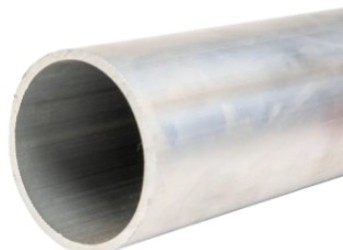
Selecting the correct outer diameter and wall thickness involves balancing three competing requirements: current-carrying capacity, mechanical strength under span loading, and corona discharge management at high voltages.
Current and Skin Effect Considerations
At power frequencies (50 or 60 Hz), alternating current tends to flow preferentially near the outer surface of a conductor — the skin effect. The skin depth for aluminum at 50 Hz is approximately 11 mm. This means that for a tube with a wall thickness greater than approximately 11 mm, the inner portion of the wall contributes less to current conduction than the outer zone. For most practical bus bar diameters (OD 50–200 mm) with wall thicknesses of 5–15 mm, the skin effect impact is moderate but should be accounted for in resistance calculations, particularly at higher frequencies or with significant harmonic content.
In practice, this means increasing the outer diameter (rather than the wall thickness) is the more efficient way to increase current capacity once wall thickness exceeds about 8–10 mm. A larger diameter also increases the surface area available for convective heat dissipation.
Mechanical Span Loading
The bus bar must support its own self-weight, wind loading, and in some regions, ice accumulation loading, across the design span without exceeding the allowable stress or deflection limits. The critical design check is the maximum bending stress at mid-span or at clamp attachment points.
For a simply supported horizontal span, the maximum bending moment M = wL²/8, where w is the distributed load per unit length (N/m) and L is the span length. The resulting bending stress σ = M × (OD/2) / I, where I is the second moment of area of the tubular cross-section. For 6063-T6 with a yield strength of approximately 170 MPa, the design allowable stress is typically set at 50–65% of yield, giving an allowable of about 85–110 MPa.
For example, a 100 mm OD × 8 mm wall 6063-T6 tube on a 10-meter span with a distributed wind load of 300 N/m and self-weight of approximately 19.2 N/m would experience a combined distributed load of roughly 320 N/m. The resulting mid-span bending stress calculates to approximately 62 MPa — comfortably within the allowable range, confirming the span is structurally acceptable.
Corona Discharge and Minimum Conductor Diameter
At voltages above approximately 66 kV, the electric field gradient at the conductor surface becomes a design constraint. Corona discharge occurs when the surface electric field exceeds approximately 1,500 kV/m (peak) in air at sea level. Increasing the conductor outer diameter reduces the surface field gradient and raises the corona onset voltage.
For a 220 kV system with a phase-to-earth voltage of approximately 127 kV (RMS), a minimum conductor OD of around 80–100 mm is commonly required to maintain corona performance within acceptable limits. At 500 kV, OD values of 120–180 mm are typical. This is why the outer diameter of high-voltage bus bars is often driven by corona requirements rather than current rating alone.
Surface Treatment and Corrosion Protection Options
The surface condition of an aluminum alloy tubular bus bar affects both its long-term corrosion resistance and the electrical performance of bolted or clamped joints. Understanding available treatment options helps in matching the specification to the installation environment.
Mill Finish (as-extruded)
Most aluminum tubular bus bars are supplied with a mill finish — the natural extruded surface with a thin native oxide layer. This is adequate for inland, non-industrial environments with moderate humidity. The surface should be cleaned and a contact joint compound applied at all bolted connections to prevent galvanic corrosion and reduce contact resistance.
Anodizing
Hard anodizing produces an oxide layer of 25–100 µm thickness, significantly improving resistance to abrasion, pitting corrosion, and atmospheric attack. It is the preferred surface treatment for coastal environments (marine C4–C5 corrosion categories per ISO 9223) and for installations in chemical plant atmospheres. Note that anodized surfaces at contact areas must be abraded or masked before anodizing to maintain low contact resistance at joints.
Tin or Silver Plating at Contact Zones
At bolted joint contact areas, tin plating (typically 10–25 µm) or silver plating (5–15 µm) is frequently specified to prevent aluminum oxide buildup and ensure stable low-resistance electrical contact over the service life. Silver plating provides lower and more stable contact resistance but at higher cost; tin plating is widely used as a practical and cost-balanced alternative.
Paint Coatings
In some industrial projects, the tubular bus bar body (excluding contact zones) is coated with an epoxy primer plus polyurethane topcoat system. This is common in petrochemical or offshore applications where a C5-M corrosion category environment is expected. Coating thickness is typically 80–120 µm DFT (dry film thickness) per coat for a two-coat system.
Thermal Expansion and Flexible Connection Design
Aluminum has a coefficient of thermal expansion of approximately 23 × 10⁻⁶ /°C — about 40% higher than steel. On a 15-meter bus bar span, a temperature change of 60°C (from winter low to summer full-load high) produces a linear expansion of approximately 20.7 mm. If this expansion is not accommodated by flexible expansion joints or sliding clamp mounts, the resulting compressive stress can cause buckling, clamp damage, or insulator failure.
Standard practice is to install a flexible expansion joint — typically a laminated aluminum flexible connector or bellows-type expansion fitting — at intervals not exceeding 30–40 meters on long straight bus runs, and at every point where the bus transitions direction or connects to equipment terminals. Expansion loops formed from bent tube sections are also used where space permits, providing the required axial movement capacity while maintaining conductor continuity.
At equipment terminal connections — such as transformer bushings, circuit breaker terminals, or disconnect switch pads — a flexible connector must always be used to decouple bus bar thermal movements from equipment terminal forces. Most transformer and switchgear manufacturers specify a maximum allowable terminal force, typically in the range of 300–800 N radial force, which a rigid bus bar connection would easily exceed during thermal cycling.
Clamp and Support Hardware Selection
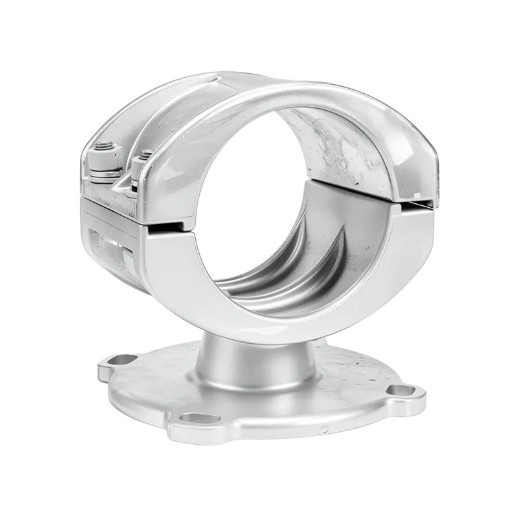
The performance of an aluminum alloy tubular bus bar system depends as much on the quality and correct selection of supporting hardware as on the conductor itself. Poor clamp design is one of the leading causes of vibration fatigue failure at support points.
Fixed vs Sliding Clamps
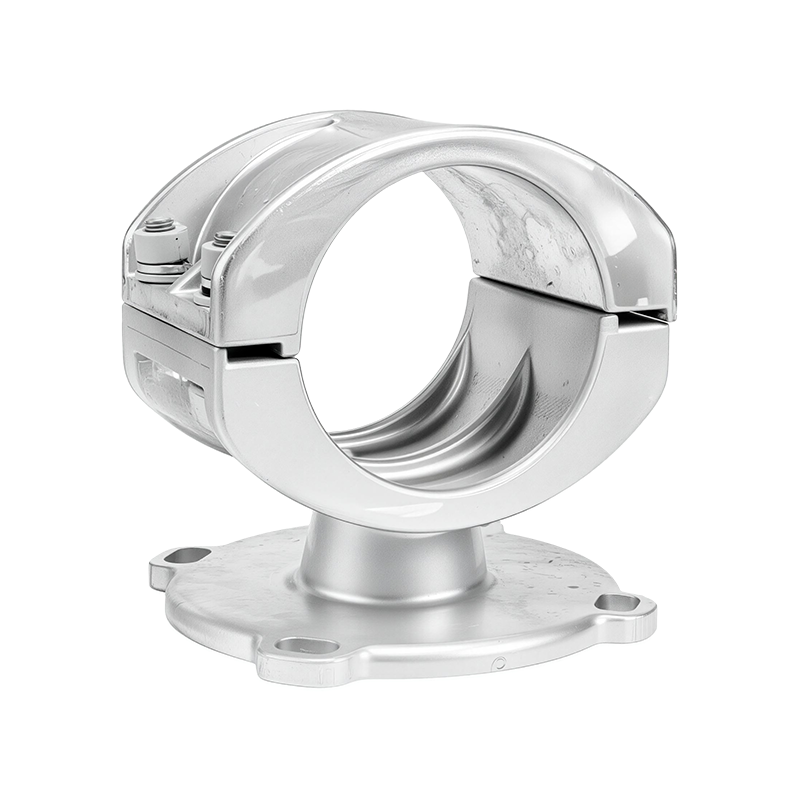
Fixed clamps anchor the bus bar rigidly at one or more points on the span — usually at the mid-point of a long run — while sliding or expansion clamps at all other support points allow the conductor to move axially. A typical arrangement for a 30-meter bus run uses one fixed clamp at the center and sliding clamps at each end and at any intermediate supports. This arrangement controls thermal expansion movement symmetrically and prevents buckling.
Clamp Material Compatibility
Clamp bodies in direct contact with aluminum bus bars should be manufactured from aluminum alloy (preferably the same alloy series) or suitably coated cast iron to avoid bimetallic galvanic corrosion. Stainless steel fasteners with insulating washers or anti-galvanic compound are recommended where ferrous hardware contacts aluminum.
Vibration Dampers
Aeolian vibration — the resonant vibration induced by steady wind at low velocities of 1–7 m/s — can cause fatigue cracking at clamp attachment points after 10⁷ to 10⁹ loading cycles. For bus bar spans exceeding 8 meters in exposed outdoor locations, stockbridge-type vibration dampers or elastomeric damper sleeves should be specified. These are typically installed within 0.5 to 1.0 meter of each support clamp.
Standards and Testing Requirements for Aluminum Tubular Bus Bars
Compliance with recognized standards ensures that the aluminum alloy tubular bus bar you specify has been produced and tested to defined quality thresholds. The following standards are most relevant:
- IEC 60105 — Aluminum and aluminum alloys: wrought products for electrical purposes. Covers chemical composition, mechanical properties, and conductivity requirements for 1350 and 6xxx series alloys used in bus bar conductors.
- ASTM B241 / B241M — Standard specification for aluminum and aluminum-alloy seamless pipe and seamless extruded tube. Widely referenced for dimensional tolerances, tensile properties, and alloy composition of 6061 and 6063 tubular products.
- EN 755-2 / EN 754-2 — European standards for extruded aluminum alloy round tubes and drawn tubes, specifying mechanical properties for 6063 and 6061 alloys in various tempers.
- GB/T 5585.2 — Chinese national standard for aluminum and aluminum alloy bus bars for electrical purposes. Relevant for projects in China and for products sourced from Chinese aluminum tubular bus bar suppliers.
- IEC 62271-1 — Common specifications for high-voltage switchgear and controlgear. Governs temperature rise, short-circuit withstand, and dielectric performance requirements for bus bar systems within switchgear assemblies.
- IEEE Std 605 — IEEE guide for bus design in air-insulated substations. Provides comprehensive methodology for current rating, mechanical design, and short-circuit force calculations for outdoor bus bar installations.
When requesting quotations from an aluminum tubular bus bar supplier, specify which standard governs material properties, dimensional tolerances, and test certification. Request mill test certificates (MTCs) that confirm chemical composition and mechanical properties for the specific production batch, not generic catalog data.
What to Evaluate When Selecting an Aluminum Tubular Bus Bar Supplier
Procurement decisions for aluminum alloy tubular bus bar systems involve more than comparing catalog specifications. A technically competent and quality-assured supplier reduces project risk throughout design, fabrication, delivery, and installation phases.
Extrusion and Fabrication Capability
A capable aluminum tubular bus bar supplier should operate or have direct access to extrusion presses capable of producing the required OD range — typically 40 mm to 300 mm OD for substation applications. Verify that the supplier can hold the dimensional tolerances specified by your design: typically ±0.5% on OD and ±5% on wall thickness for standard EN or ASTM tolerances, or tighter tolerances for precision switchgear applications.
Value-Added Processing
Many substation projects require bus bars that arrive pre-cut to length, with drilled or punched bolt holes, machined end faces, and plated contact zones. Confirm whether the supplier provides these value-added services in-house or subcontracts them, as subcontracting adds lead time and potential quality control gaps. In-house CNC machining, drilling, and plating capability is a meaningful differentiator.
Material Traceability
Full material traceability — from the billet melt number through extrusion run, heat treatment, and final inspection — is a requirement for utility and power generation projects. The supplier should be able to provide heat number, alloy certification, temper designation, and mechanical test results traceable to the specific product shipped. This is particularly important for projects subject to third-party inspection or owner engineer review.
Quality Management and Third-Party Certification
ISO 9001 certification is a baseline expectation for a credible aluminum tubular bus bar supplier. For nuclear, offshore, or defense-adjacent projects, additional quality system requirements (e.g., ISO 3834 for welding quality, NADCAP for surface treatment) may be applicable. Request evidence of third-party audits and ask for customer references from comparable substation or transmission projects.
Lead Time and Packaging
Standard stock profiles (OD 50–150 mm in 6063-T6) are typically available with lead times of 2–6 weeks from stock-holding suppliers. Custom diameters, alloy grades, or heavily processed components may require 8–16 weeks from order placement. Confirm export packaging requirements — bus bars over 6 meters in length require custom wooden crating or steel stillages to prevent transit damage, and the supplier's experience in international shipping documentation is worth verifying for cross-border projects.
Installation Best Practices for Long-Term Reliability
Even a correctly specified aluminum alloy tubular bus bar can underperform or fail prematurely if installation practices are inadequate. The following points summarize the most critical installation requirements.
- Joint preparation: At all bolted contact surfaces, clean the aluminum to bright metal with a stainless steel wire brush immediately before assembly. Apply a conductive joint compound (containing zinc particles or similar) to both mating surfaces before bolting. Do not leave cleaned surfaces exposed for more than approximately 30 minutes before completing the joint.
- Bolt torque: Use Belleville spring washers (disc spring washers) under bolt heads and nuts at all aluminum-to-aluminum bolted connections. Aluminum creeps under sustained compressive load, causing bolted joint clamping force to decrease over time. Belleville washers compensate for this relaxation and maintain adequate contact pressure. Follow the torque schedule specified by the clamp or connector manufacturer — typically 30–60 Nm for M12 bolts in aluminum-to-aluminum joints.
- Alignment: Ensure bus bar segments are correctly aligned before tightening support clamps. Lateral misalignment of more than 2–3 mm at joint positions introduces bending stress concentrations that reduce fatigue life under wind and short-circuit electromagnetic loading.
- Welded joints: Where field welding is performed (e.g., for expansion loops or T-joints), use MIG or TIG process with ER4043 or ER5356 filler wire as appropriate for the base alloy. Post-weld heat treatment is generally not required for 6063 or 6061 bus bar joints, but the heat-affected zone will experience local reduction in tensile strength of approximately 30–40% relative to the T6 temper — this must be accounted for in the mechanical design.
- Post-installation inspection: Conduct a thermographic survey of all bolted joints under load within 3 months of commissioning to identify any high-resistance joints before they become a service issue. Repeat at intervals of not more than 3 years for critical distribution bus bar systems.
Frequently Asked Questions



-
 +86-180 3625 3000
-
 admin@wpbusbar.com
-
 No. 8, Yanjin Road, Chengxi Industrial Park, Shanyang Town, Baoying County, Yangzhou City, Jiangsu Province, China
Copyright © Jiangsu Wopeng Power Technology Co., Ltd.
All Rights Reserved.
 Custom Insulated Bus Bar Manufacturer
Tubular Busbar System Factory
Custom Insulated Bus Bar Manufacturer
Tubular Busbar System Factory